
Ulaanbaatar’s traffic problems had already made an impression on me in the previous part of my journey. One reason for the congestion is the city’s rapid growth, driven by heavy migration from rural areas. Today, almost half of Mongolia’s population lives in the capital. As the number of vehicles has increased faster than the road network can accommodate, traffic has become one of the city’s most serious problems.
This rapid transformation was visible everywhere. Gers stood in gardens and on the outskirts of the city, while Buddhist monasteries appeared between modern buildings. People in traditional clothing walked past karaoke bars, fast-food restaurants and high-rises standing beside older structures. Traditional life, rapid urbanisation and globalisation seemed to overlap at every turn.

Sükhbaatar Square
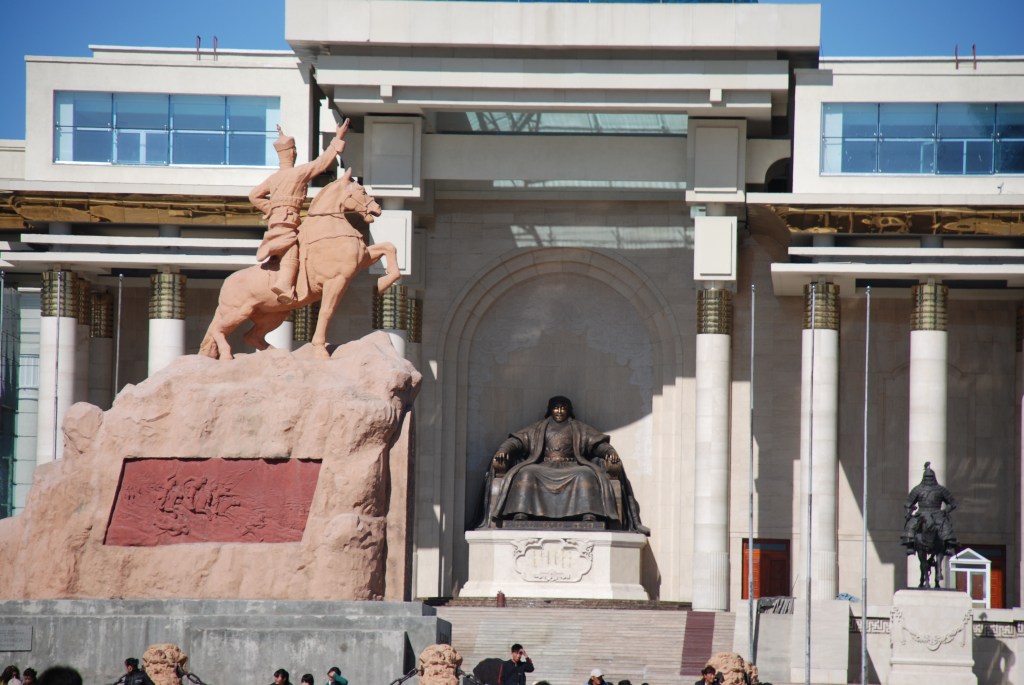
The best place to begin getting to know Ulaanbaatar is Sükhbaatar Square in the heart of the city. At its centre stands the equestrian statue of Damdin Sükhbaatar, one of the leaders of the 1921 Mongolian Revolution. To the north rises the imposing Government Palace, which houses the parliament as well as the offices of the president and the prime minister. In the centre of its columned façade stands a large statue of Genghis Khan, flanked by statues of his son Ögedei Khan and his grandson Kublai Khan.
The Sükhbaatar statue in the square and the Mongol rulers on the palace façade brought different periods of the country’s history together in one place. Seeing all these historical figures at the centre of the city was deeply impressive.
Two Museums of Mongolian History
Two important museums stand close to Sükhbaatar Square: the National Museum of Mongolia and the National Museum of the Chinggis Khaan. For me, they were natural starting points for learning about Mongolia’s history and culture.
The National Museum of Mongolia presents the country’s history, archaeological heritage, ethnic communities and traditional life. The National Museum of the Chinggis Khaan focuses on Genghis Khan, the Mongol Empire and the Mongolian state tradition.
Born Temüjin, Genghis Khan united the Mongol tribes under a single rule in 1206 and laid the foundations of the Mongol Empire. In Mongolia, he is remembered not only as a great ruler and military leader, but also as a founding figure of Mongolian unity and identity. His name is therefore present everywhere—from museums and public squares to the airport.
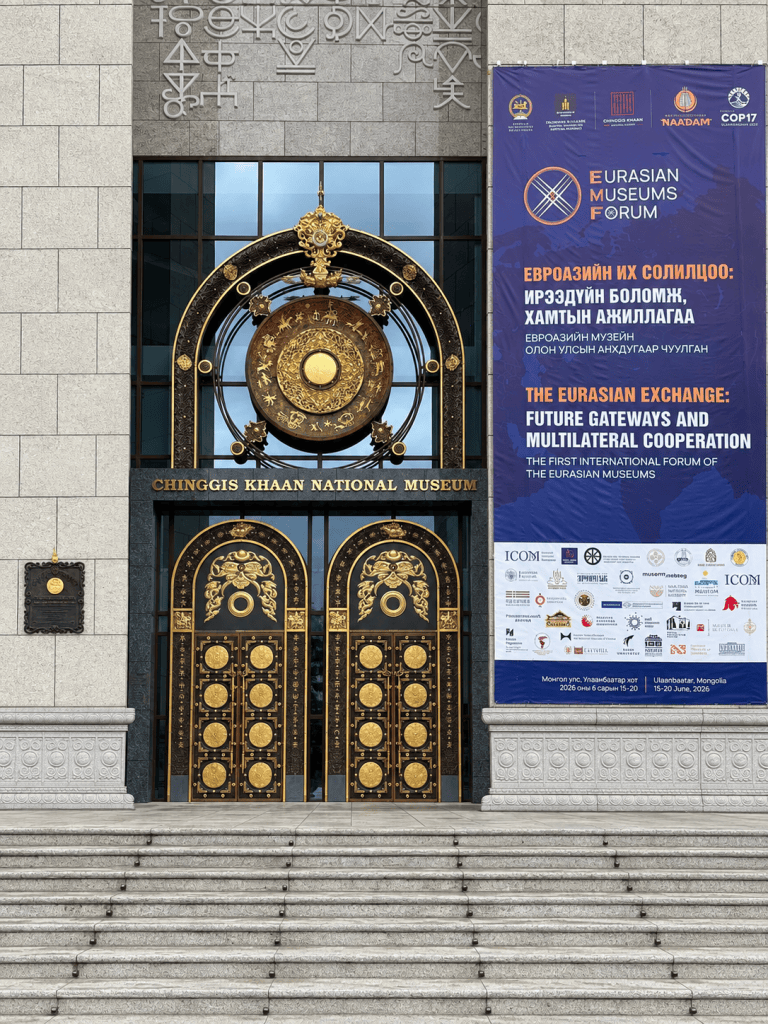
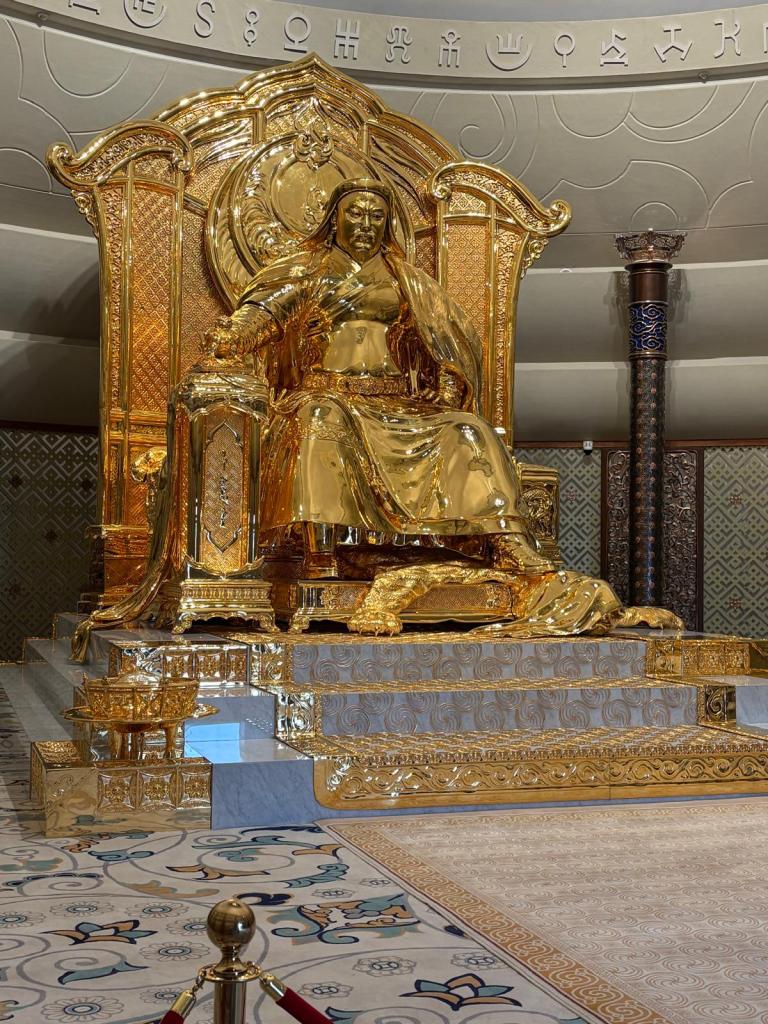
The nine-storey National Museum of the Chinggis Khaan opened in 2022. At the centre of the Great Khan’s Hall of Honour on the top floor stands a magnificent golden statue of Genghis Khan seated on his throne. Its dome, reminiscent of a traditional Mongolian tent, gives the hall a ceremonial atmosphere.
Before entering, visitors are required to put shoe covers over their shoes. They are also asked to remain quiet and not to turn their backs on the statue when leaving. The grandeur of the statue and the solemn rules made me feel less as though I were looking at an ordinary museum object than as though I had been admitted into the presence of a ruler.
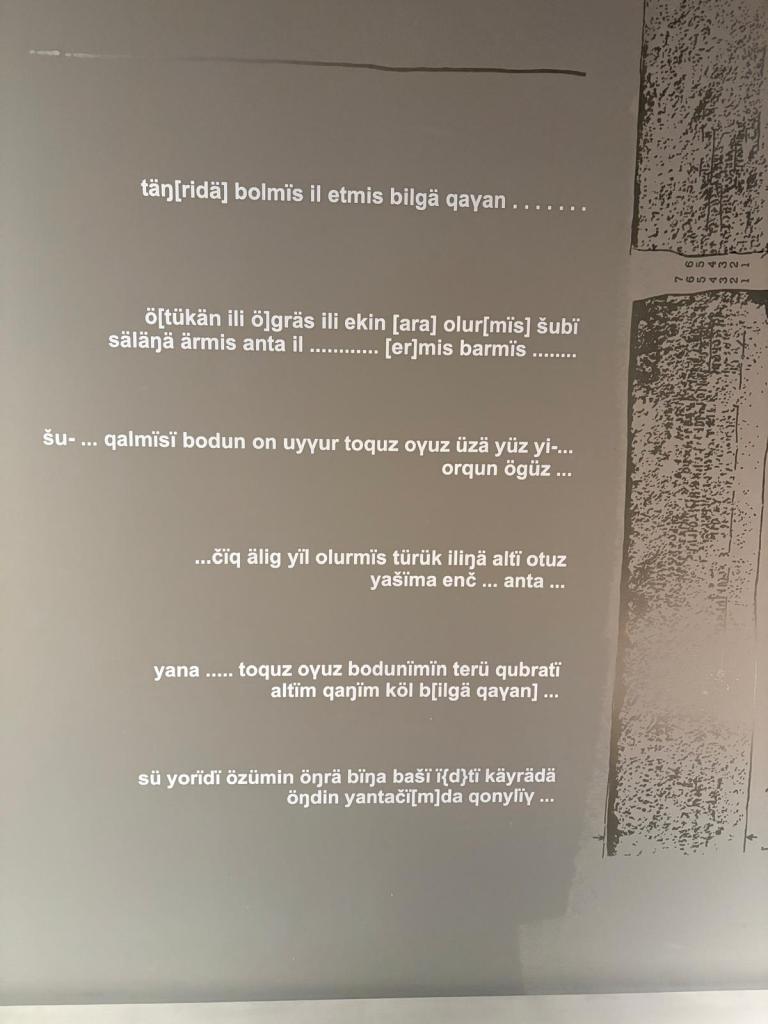
One of the museum displays that excited me most showed an ancient Turkic inscription alongside a Latin-letter transcription. As far as I could understand, these lines belonged to an Old Turkic inscription dating from the eighth century. They included the names Ötüken, the On Uyghur and the Toquz Oghuz, as well as a phrase that roughly referred to Bilge Khagan as a ruler who had become sovereign and established a state by the command of Heaven. The inscription broadly described the khagan’s rule and the political struggles of the period.
I did not have the opportunity to visit the Orkhon Valley and see the inscriptions in their original setting. Even so, encountering these Old Turkic lines here was thrilling.
Tibetan Buddhism and Gandan Monastery
A significant part of Mongolia’s population identifies as Buddhist. The form of Buddhism practised in the country developed in Tibet and gradually became intertwined with Mongolian culture. Ulaanbaatar is home to many Buddhist temples and monasteries, the most important being Gandantegchinlen Monastery, widely known as Gandan Monastery, which is considered the centre of Mongolian Buddhism.
The monastery dates back to the beginning of the nineteenth century. It was closed during the anti-religious campaigns of the 1930s and reopened in 1944. For many years, it was the only monastery in the country permitted to operate.
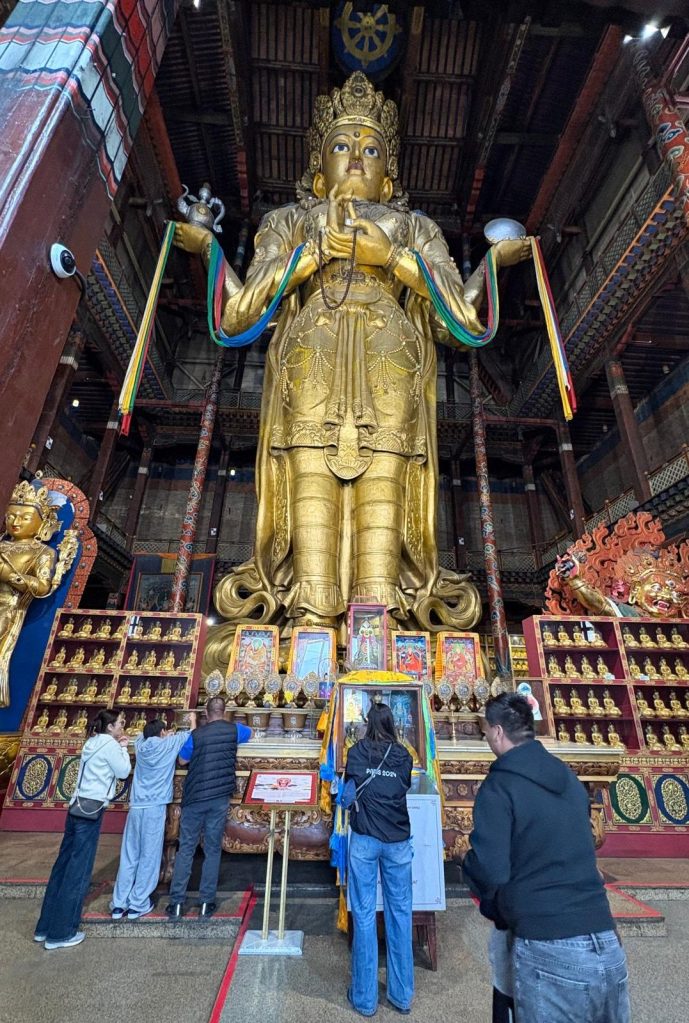
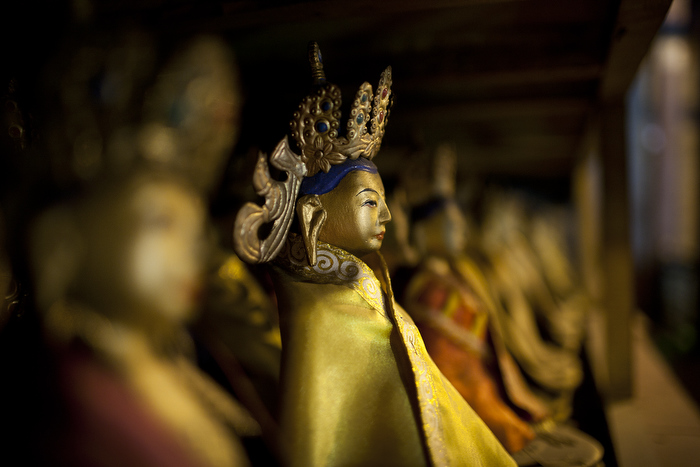
The place that affected me most was the temple housing the Megjid Janraisig statue, which is approximately 26.5 metres high. Representing compassion in Buddhist tradition, the monumental figure is surrounded by rows of 1,000 smaller Buddha statues. The contrast between the central figure and the smaller images made the atmosphere inside the temple even more powerful.
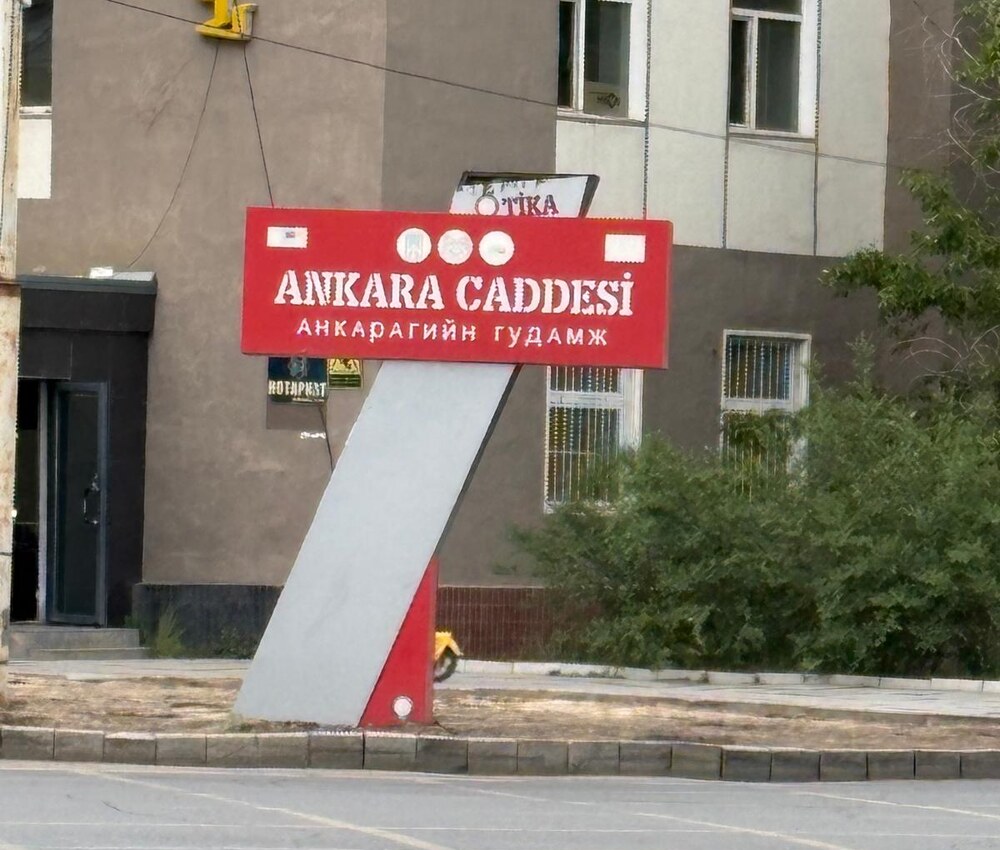
Ankara Street
To avoid the traffic, I walked to most places in the city. Although I occasionally lost my way, walking brought me to places that had not been on my itinerary. One of them was Ankara Street. Seeing the name of Ankara thousands of kilometres from home warmed me more than I expected.
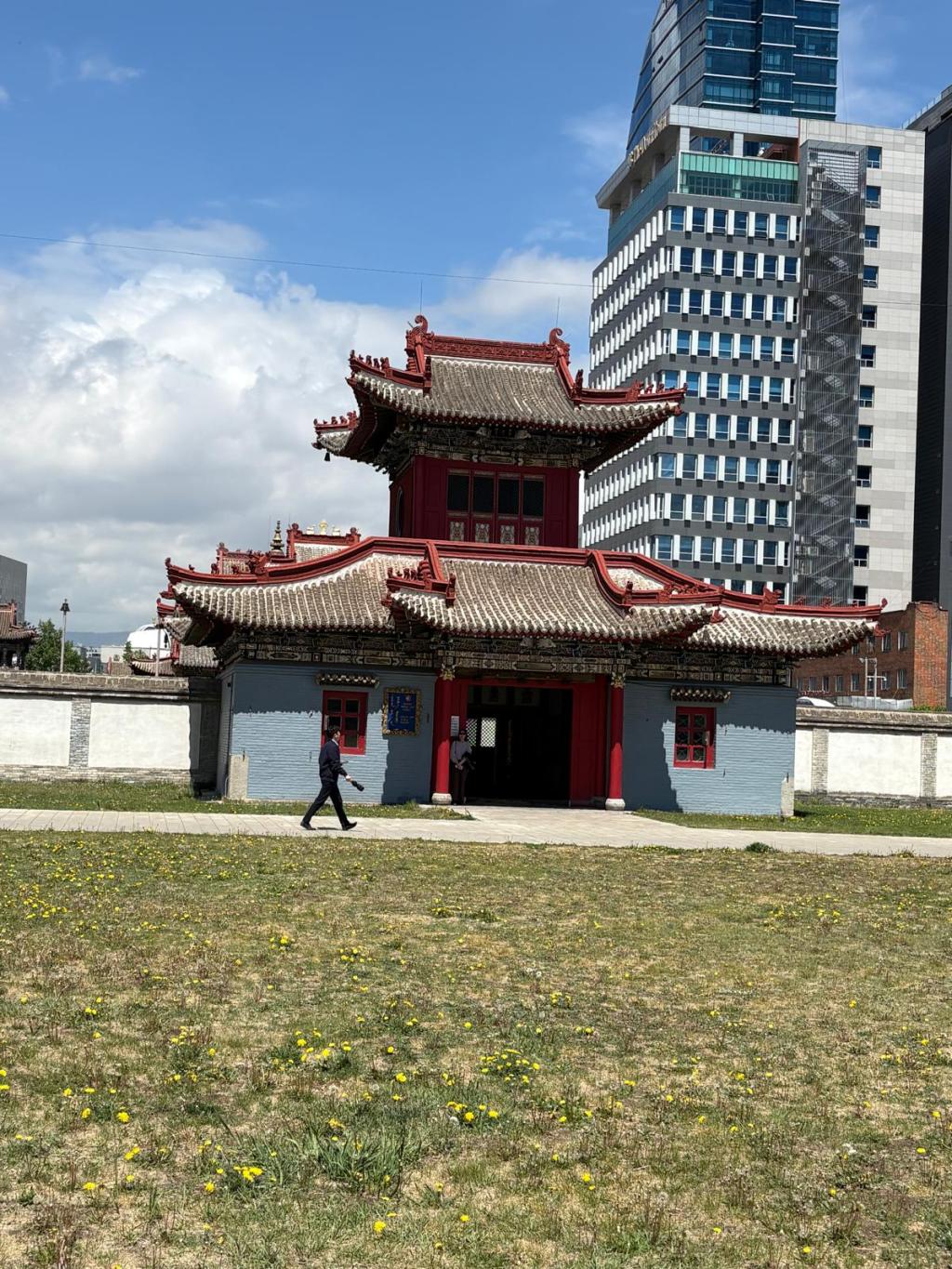
The Winter Palace of Mongolia’s Last Ruler
At the end of my walk, I reached the Winter Palace of Bogd Khan, Mongolia’s last ruler. The palace was quite far from where I was staying, and I was exhausted when I arrived. Yet as soon as I went inside and began exploring, I quickly forgot my fatigue.
Bogd Khan was one of the important spiritual leaders of the Tibetan Buddhist tradition and also the ruler of Mongolia after the country declared independence in 1911. Until his death in 1924, he played a major role in both the religious and political life of the country.
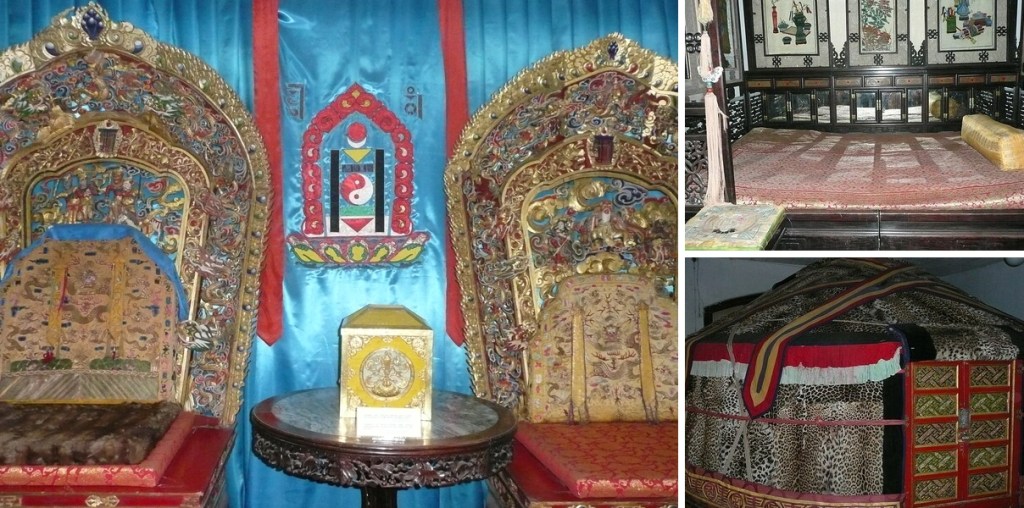
The Winter Palace is part of a larger palace and temple complex. Alongside the two-storey European-style palace, the complex contains six temples displaying Buddhist works of art, religious texts and religious paintings known as thangka, usually made on cloth. The palace itself contains furniture, clothing, thrones, ceremonial objects and personal belongings used by Bogd Khan and his wife, Dondogdulam.
The presence of lavish palace rooms and colourful temples within the same complex made Bogd Khan’s dual role as ruler and spiritual leader tangible.
Narantuul Market
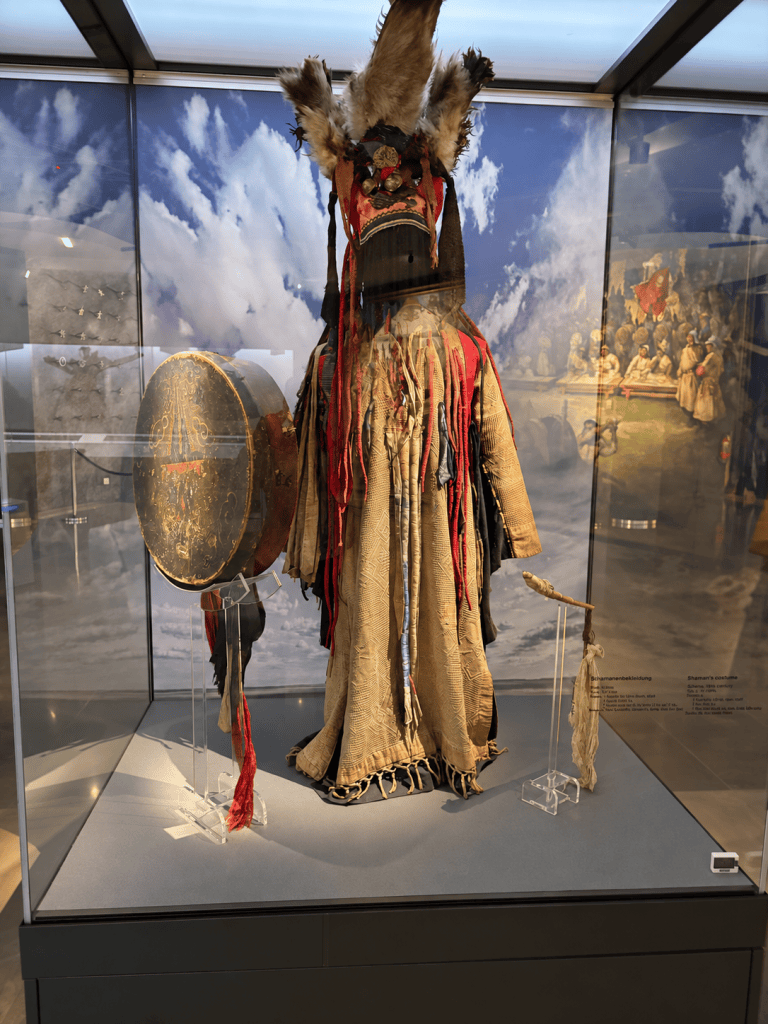
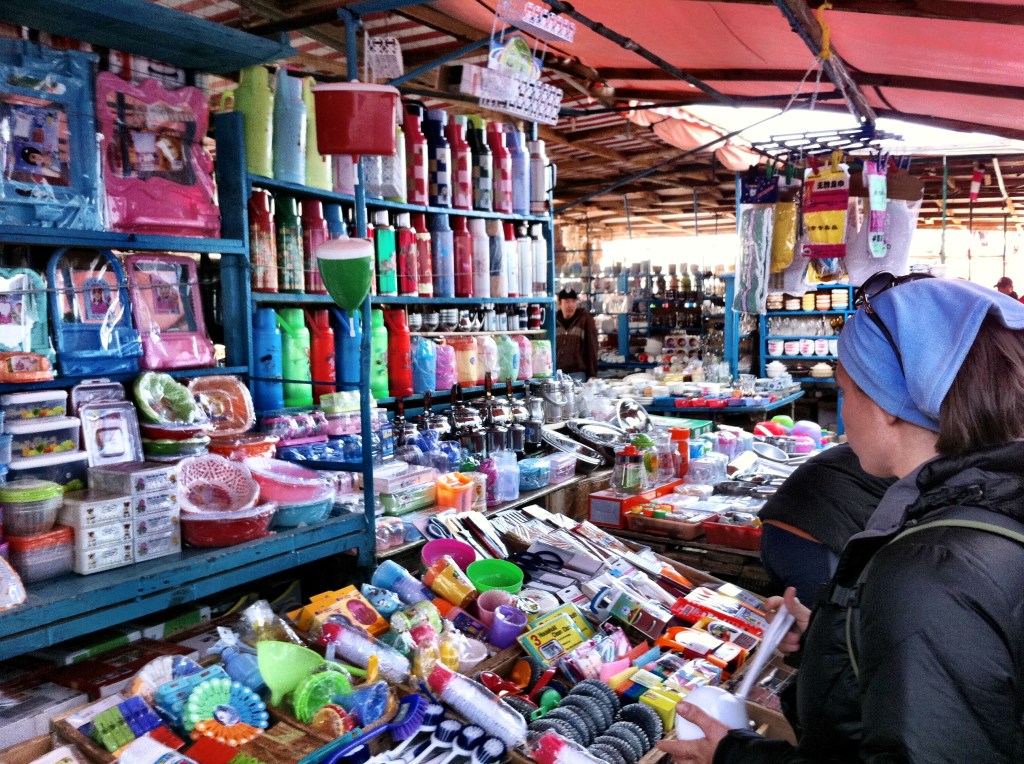
One of Ulaanbaatar’s most colourful places is Narantuul Market, also known as the Black Market. You can find almost everything here: objects from the Soviet period, shamanic clothing, bells and drums, Buddhist objects, Mongolia’s famous cashmere sweaters and leather goods.
Unfortunately, the market was flooded by heavy rain on the day I visited. I had to turn back without exploring it properly. To show what the market normally looks like, I have included a photograph.
Leaving Ulaanbaatar
The days I spent in Ulaanbaatar allowed me to see Mongolia’s past and present side by side. The journey brought together very different images: the sound of shamans’ drums, the quiet of Buddhist monasteries, the imposing legacy of Genghis Khan and a rapidly changing modern city. Ulaanbaatar, whose name I had once searched for in a world atlas, had become a living place in my mind, filled with sounds, colours and the people I encountered.
Yet I felt that my journey through Mongolia was not complete. I had not seen the countryside or the inscriptions in the Orkhon Valley. I said goodbye to Ulaanbaatar, hoping to return before too long.


.jpg)
.jpg)

