
Before ending my Buryatia series, I wanted to share a few practical notes that may be useful if you are planning a trip there. Some of this information may change over time, so I recommend checking the latest visa and entry requirements before you travel.
Do I need a visa? What is RuID?
The Republic of Buryatia is part of the Russian Federation, so the same entry requirements that apply to Russia also apply to Buryatia.
Visa requirements depend on your nationality and passport type. As a Turkish citizen with a special passport, I was able to travel to Russia without a visa for up to 30 days. Turkish citizens with ordinary passports need a visa, although an electronic visa is available for eligible trips.
Visa-free foreign visitors to Russia may also need to register their trip in advance through RuID, a mobile application used to submit personal and travel information before arrival. You can find it on the App Store or Google Play.
The application asks for information such as passport details, travel dates, the purpose of the visit and the regions you plan to visit. Biometric information, including a facial photograph and voice recording, may also be required. Registration generally needs to be completed at least 72 hours before entering Russia.
As these rules can change, I strongly recommend checking the current visa and RuID requirements through official sources before travelling.
How do you get to Buryatia and get around?
There are no direct Turkish Airlines flights from Istanbul to Ulan-Ude. I flew with S7 from Istanbul via Novosibirsk to Baikal International Airport in Ulan-Ude. With a connection of about two hours, the entire journey took around 11 hours and was quite comfortable.
For a more adventurous route, another option is to fly to Ulaanbaatar in Mongolia and continue to Ulan-Ude by train. The train journey takes around 15 hours. As this involves crossing an international border, check current train schedules and border requirements before planning this route.
From Baikal International Airport, you can reach central Ulan-Ude by public transport or taxi. I took a taxi. Taxis are also available in the city, but because I had no mobile internet, I usually asked someone at my hotel, restaurant or wherever I happened to be to call one for me.
I travelled through the Barguzin Valley by car with friends. Buses also run from Ulan-Ude to Kurumkan, with the journey taking around seven hours. However, if you want to explore the villages, sacred sites, hot springs and natural areas along the way, having a car makes things much easier.
What about money and credit cards?
The local currency is the Russian ruble. Credit and debit cards issued in Türkiye do not work in Russia, so carrying cash is important.
When I visited, there was no currency exchange office at Baikal International Airport. I had to go to banks in central Ulan-Ude to exchange money, and banking facilities become much harder to find as you travel north into smaller settlements.
Banks can also be very particular about the condition of foreign banknotes. The notes are checked both by machine and by hand. At two different banks, some of my US dollar notes were rejected even though I could not see anything wrong with them.
For this reason, having some rubles before you arrive can make things much easier. If you are travelling beyond Ulan-Ude, especially into the Barguzin Valley, make sure you have enough cash with you.
What about mobile phones and internet access?
When I arrived in Russia, I first tried to buy a local physical SIM card, but the registration requirements for foreign visitors made this difficult. I then bought an eSIM online, but unfortunately that did not work either.
Foreign visitors currently need to complete additional identity-verification procedures to obtain a Russian SIM card. For a short trip, getting connected may therefore be more complicated than you expect. I recommend checking the latest requirements before travelling.
During my trip, I mostly relied on Wi-Fi in hotels, restaurants and cafés.
When is the best time to visit Buryatia?
Buryatia lies in southern Siberia and has a continental climate, with very cold winters. Average winter temperatures are around −28°C.
For a first visit, June, July and August are probably the easiest months. Even in summer, however, the weather can change quickly, especially around Lake Baikal and in the Barguzin Valley. I travelled in August and still experienced some very cold days, so bring warm clothes even in summer.
But if you are thinking, “I can handle the cold. I want to see Lake Baikal frozen and dance on the ice,” then March offers a completely different experience. It is a popular time for winter activities on the frozen lake.
Where can you stay?
There are plenty of accommodation options in central Ulan-Ude. I stayed at Hotel Buryatia. Its central location meant that I could walk to many of the places I wanted to visit. It is simple and clean, with a good breakfast and helpful staff. Having a bank right next door was also very convenient for me.
Apartments are another option in Ulan-Ude. Ostrovok can be useful for finding and booking accommodation in Russia.
As you travel north into the Barguzin Valley, accommodation becomes more limited. Tourism is still developing in the region, although I saw several new hotels being built during my visit.
I am not quite sure whether I should be happy or sad about that. The Barguzin Valley has so much to offer and could become an important destination for travellers. At the same time, increased tourism could threaten the untouched landscapes and tranquillity that make the valley so special.
In Alla village, I stayed in a shaman’s home, so I did not need a hotel in the countryside.
What can you eat in Buryatia?
Buryat cuisine shares many similarities with Mongolian cuisine, but Russian influences are also easy to see. Livestock farming is important in the region, so meat and dairy products feature prominently. At breakfast, you will often find dairy products such as cottage cheese and cream.
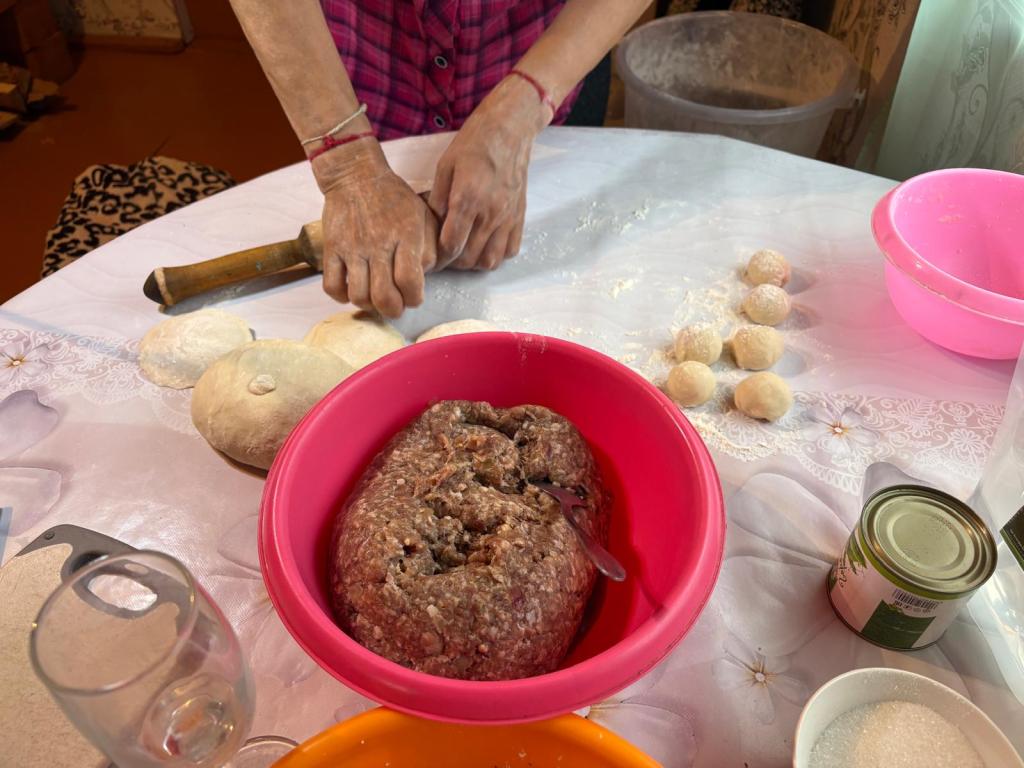
One of Buryatia’s best-known dishes is buuz, a steamed dumpling traditionally filled with meat.
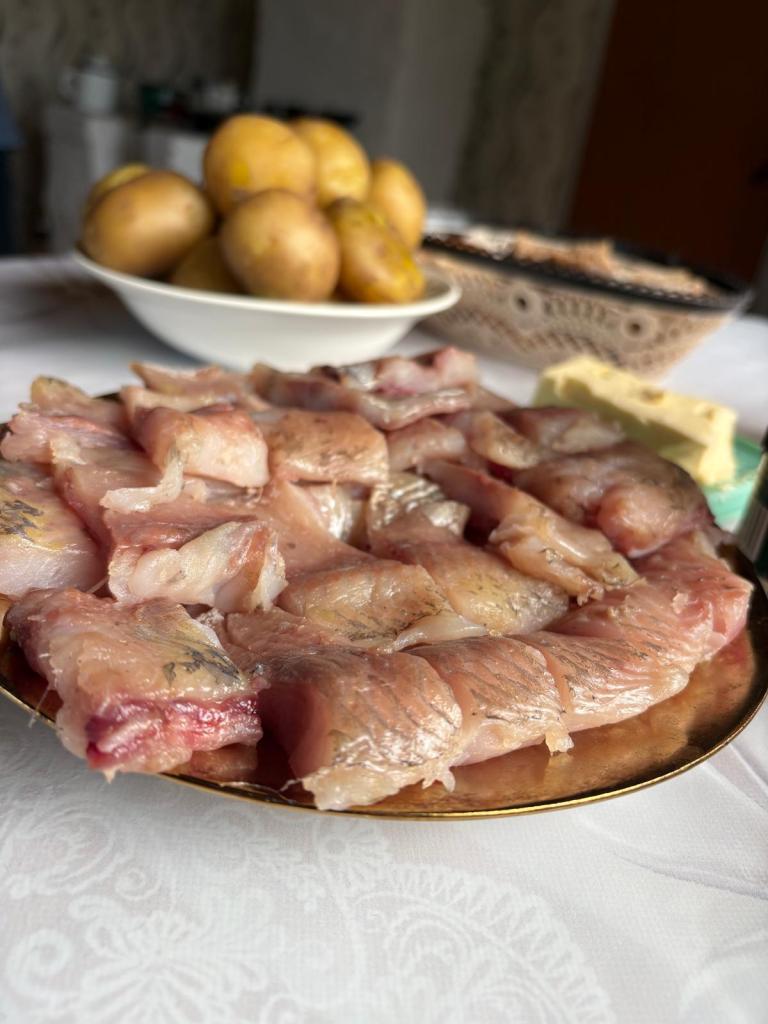
River fish are also common. What surprised me was seeing some of them served raw. I did not dare to try them, but it was certainly one of the food experiences from Buryatia that stayed in my mind.
If you are vegetarian like me, your choices are a little more limited, but you certainly will not go hungry. Vegetable dishes and vegetarian borscht are available, and I even managed to find a vegetarian version of buuz.
In Ulan-Ude, I can recommend Marco Polo, which has vegetarian options, and Tengis.
For coffee or something sweet, try Atlas. I had a lovely herbal tea there, and the cakes were excellent.
That is all for my practical notes on travelling in Buryatia. See you in the next post…

