
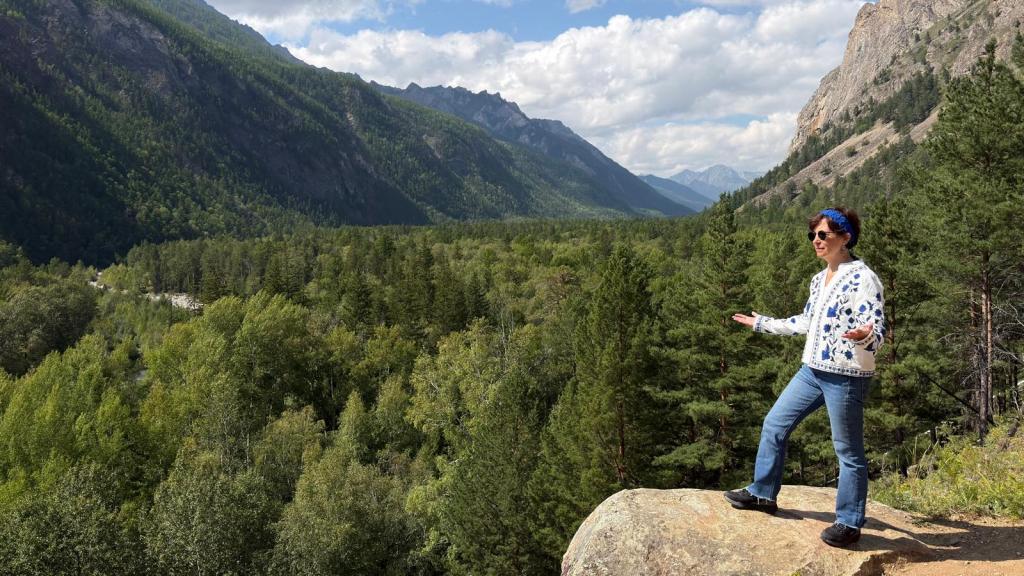
This time, my travels took me to Buryatia, east of Lake Baikal and just north of Mongolia. This autonomous republic of the Russian Federation lies in the region known as Southern Siberia. Nearly a million people live here, although the Buryats themselves make up only about a third of the population. Most residents are Russian, alongside smaller communities of Tatars, Soyots and Evenks. Historically and culturally, the Buryats are closely related to the Mongolian peoples.
I began my journey in Ulan-Ude, Buryatia’s capital, before travelling on to the Barguzin Valley, where I spent a week in a shaman’s home.
So why Buryatia? It is hardly an obvious tourist destination, and more than a few people asked me what had drawn me there.
The answer was curiosity. I wanted to learn more about the ancient beliefs that are still woven into everyday life in Buryatia, especially its shamanic traditions. Very early in the trip, though, I discovered that “Shamanism” was not necessarily the right word. One Buryat I met gently corrected me: he preferred to speak of ancestor worship. Professor Kürşat Demirci, a scholar of the history of religions, makes a similar point, describing animism and ancestor worship as the foundations of this spiritual world.
Animism is perhaps less a religion than a way of seeing the world. In this view, everything in nature—not only people, animals and plants, but also mountains, valleys, rivers and even stones—has a spirit or spiritual essence. Human beings are part of this living world, not separate from it, and are expected to live in harmony with nature and its spirits.
In Buryatia, these ideas do not remain in books. They are visible everywhere in daily life.
As we travelled, we often passed sacred places devoted to nature spirits. Colourful strips of cloth fluttered from trees and poles. People stopped to pray, make wishes and leave small offerings—wheat, rice, milk, biscuits, sweets, vodka or coins. Food left for birds, squirrels and other wild animals was part of the same tradition.
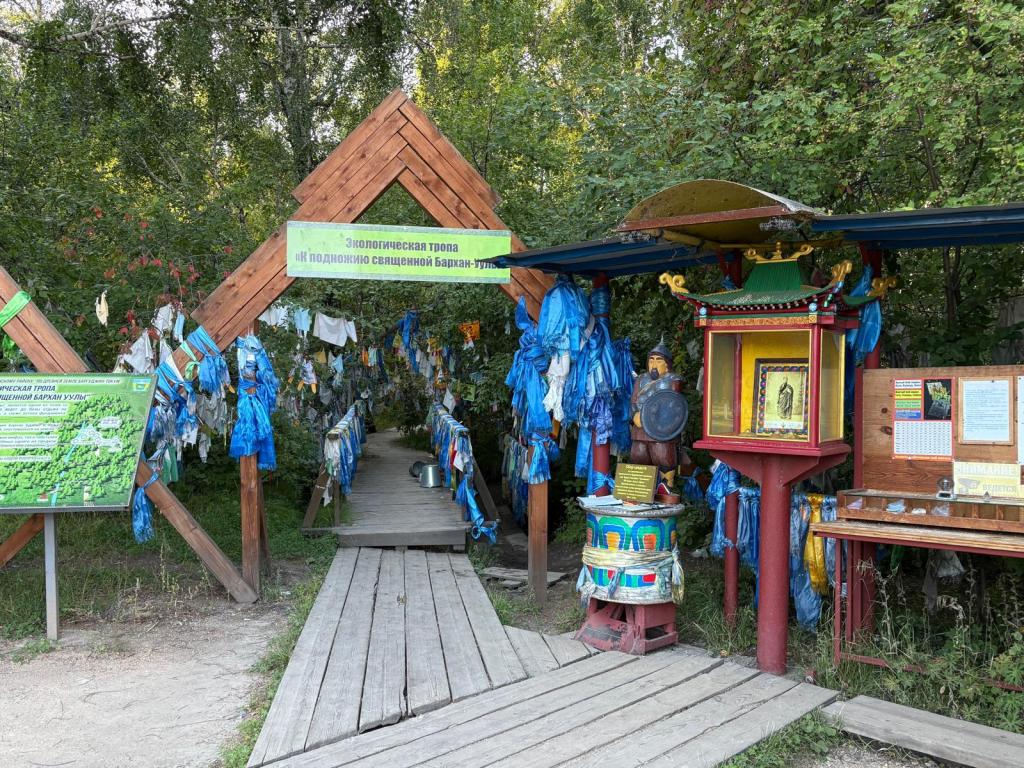
This relationship with nature continued well beyond the sacred sites. While I was travelling with Larissa, the shaman who hosted me, I watched her occasionally scatter grains of rice and wheat through the car window for Mother Earth, quietly making a wish as she did so. It soon became clear that this was not a rare ceremonial moment, but simply part of the rhythm of everyday life.
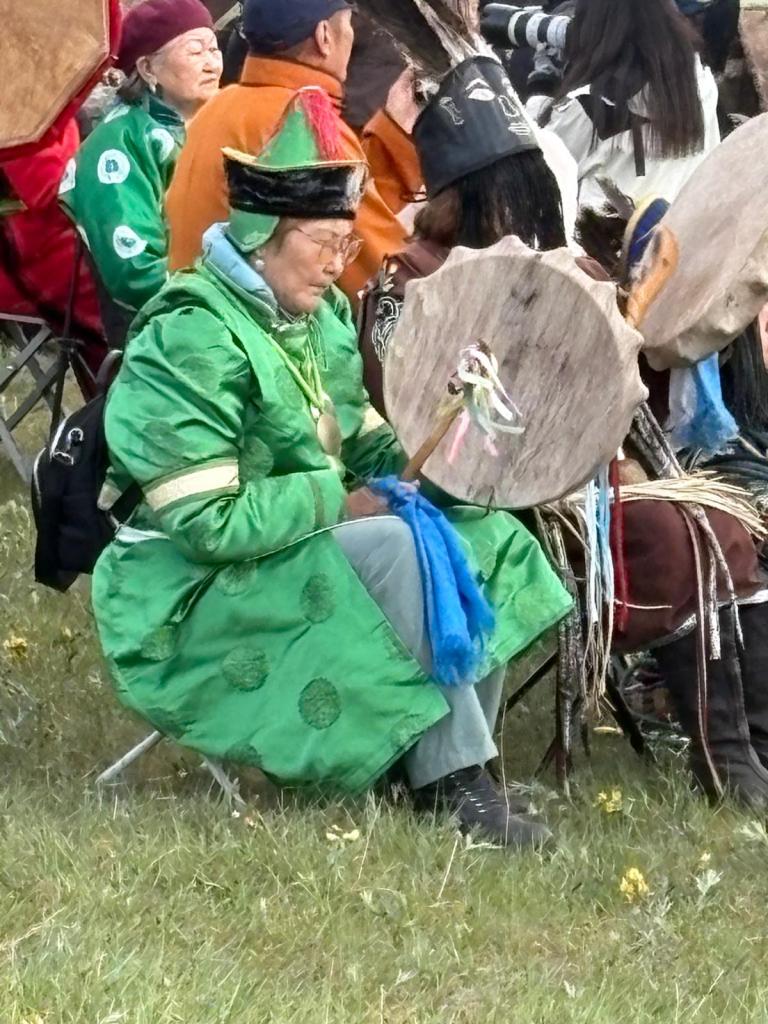
Ancestor worship is another central part of this spiritual world. People honour relatives who may have died generations ago and believe that they still watch over the family. The dead may sometimes return to the world of the living and involve themselves in earthly affairs—and they are not always assumed to be entirely benevolent. Keeping the ancestors content and asking for their blessing therefore matters.
And that is where the shaman comes in.
Shamans act as intermediaries, communicating with both nature spirits and the spirits of the dead. A person’s troubles may be understood as a sign that their relationship with nature or their ancestors has fallen out of balance. The shaman’s role is to uncover the source of the problem and help restore harmony.
In Buryat, a female shaman is called an udagan and a male shaman a böö. There are also different ranks and levels of experience. If a shaman encounters a problem beyond their abilities, they may turn to someone older, more experienced or of a higher rank.
Among the shamans I met were Larissa and Nadya. Each woman had her own story and her own path into shamanism.
What surprised me most was learning about blacksmith shamans. Yuri, one of the people I met, was both a blacksmith and a shaman. At first, I could not see how the two roles were connected. Then I learned that blacksmithing is far more than an ordinary craft in Buryat tradition.
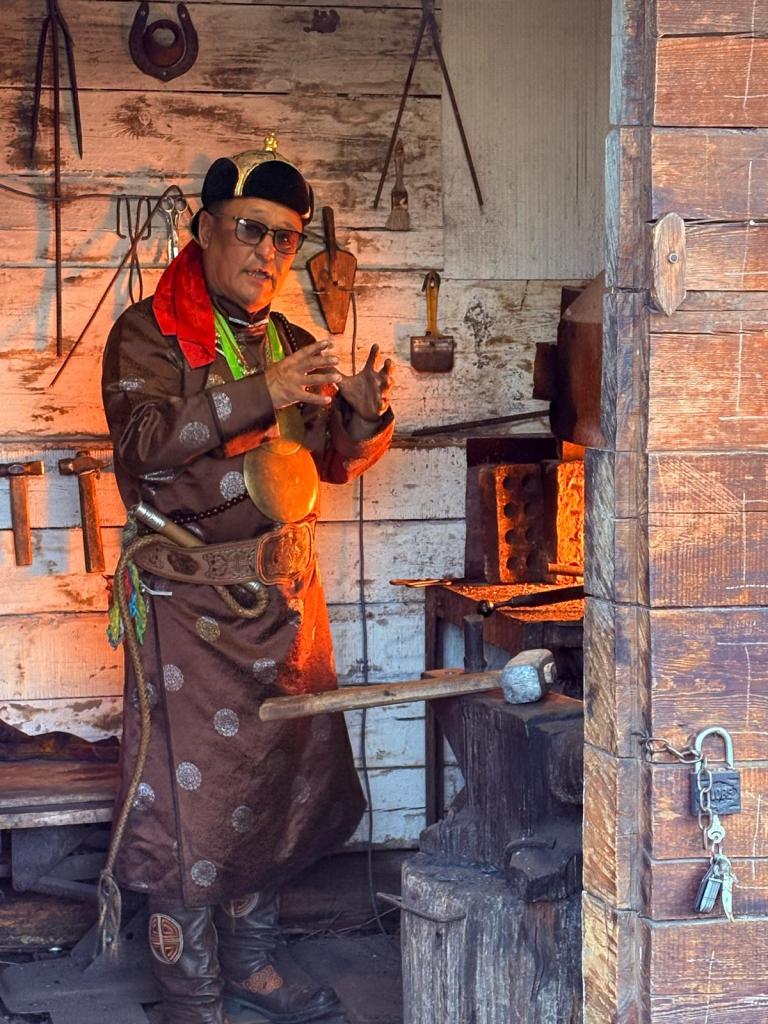
Known as the darkhan tradition, blacksmithing is considered sacred and is often passed down through families, much like shamanism. The Buryat word for a blacksmith is darkhan or darhan. A blacksmith’s skill is believed to come from the ancestors, while the spirits of earlier blacksmiths offer protection. At the heart of it all are fire and the power to transform iron.
The bond between blacksmith and shaman is fascinating. One uses fire to transform metal; the other uses ritual to create a bridge between human beings and the spirit world. Blacksmiths also traditionally make many of the metal pieces worn or used by shamans. Fire, iron, ancestors and spirits all meet in the same symbolic world.
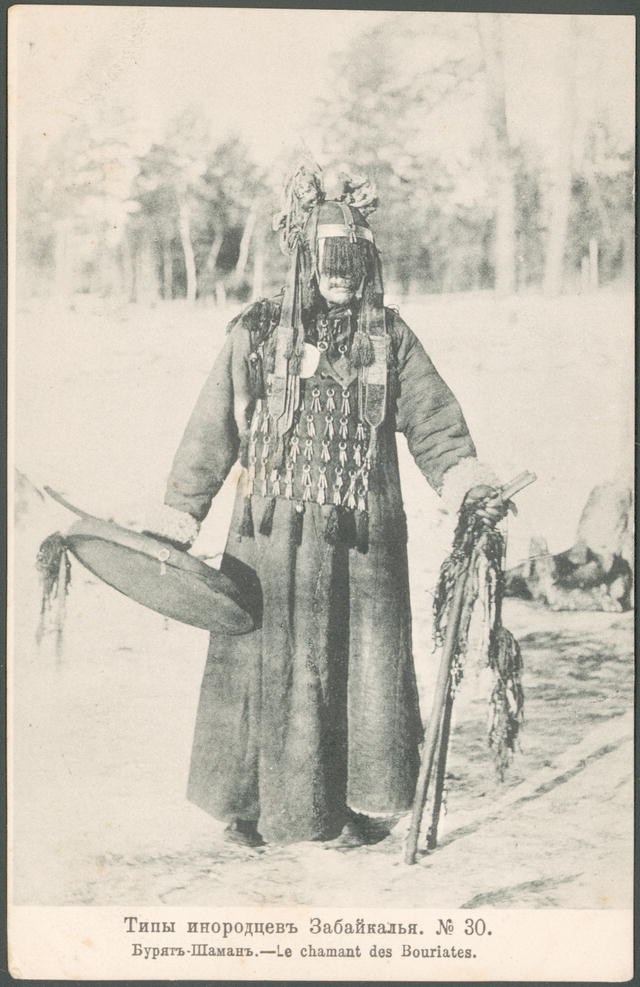
Rituals differ according to a shaman’s lineage and tradition, and their ceremonial clothing is full of colour and symbolism. Mirrors, pieces of metal, animal teeth, feathers, claws and fragments of hide may all be attached to it. The mirrors worn around the neck or sewn onto the clothing are believed to send negative energy back to wherever it came from.
Yet Buryatia’s spiritual landscape is not limited to these older traditions. Buddhism is just as visible.
Buddhism began in India with the teachings of Siddhartha Gautama, the Buddha. In Buryatia, it is practised mainly in the Tibetan tradition. From what I saw, however, there was no clear distinction between Buddhism and the region’s older animistic and shamanic beliefs. Sometimes they existed side by side; sometimes they blended into one another. I even came across the term lama-böö, or “lama-shaman”, for people who bring elements of both traditions together.
I will return to this spiritual world in the chapters ahead. Almost every mountain, river and sacred place I encountered—and many of the people I met—seemed to carry some trace of it.
But first, let us go back to where the journey began: Ulan-Ude.
 Pınar’ın Gezi Günlüğü
