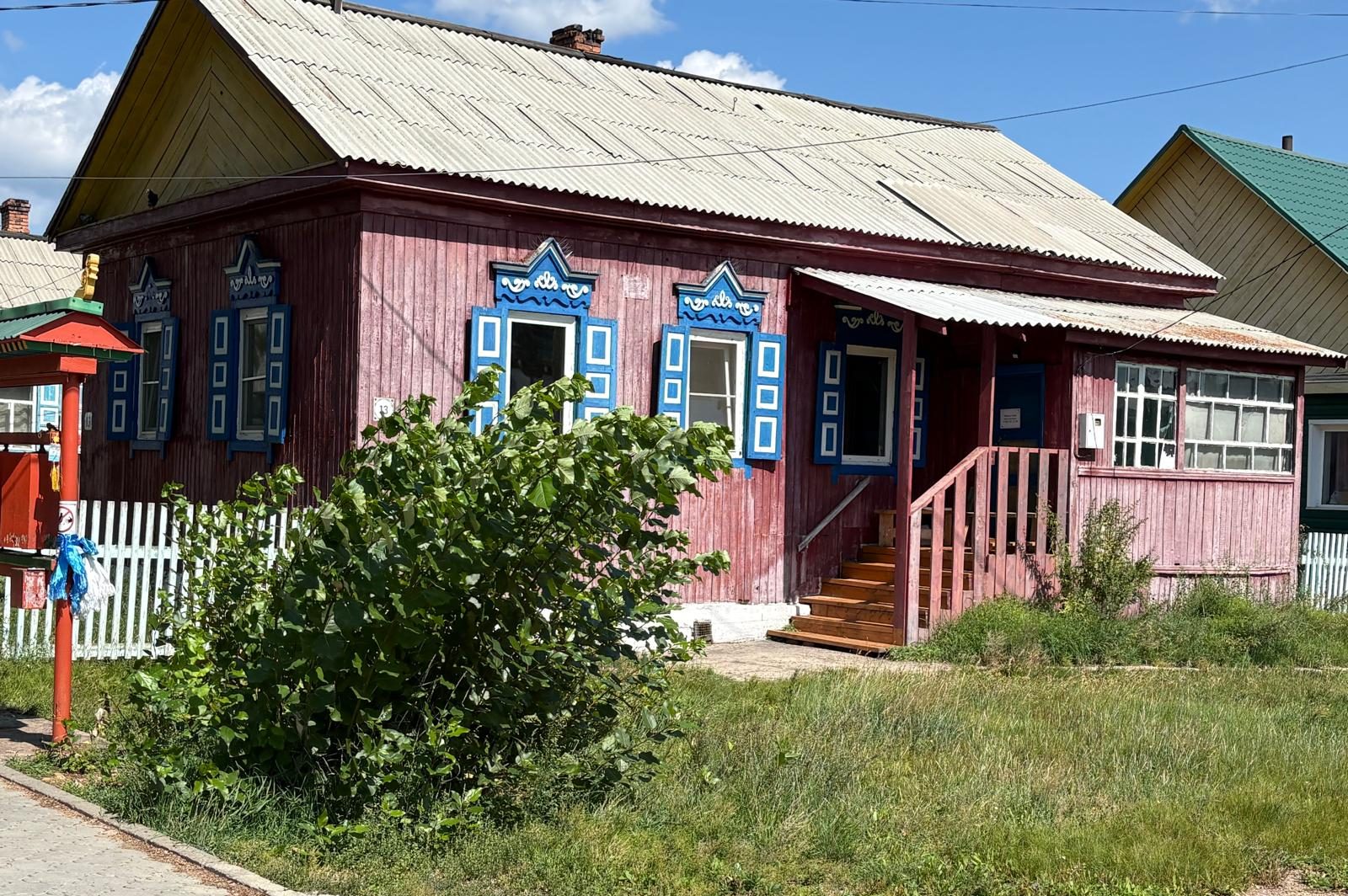
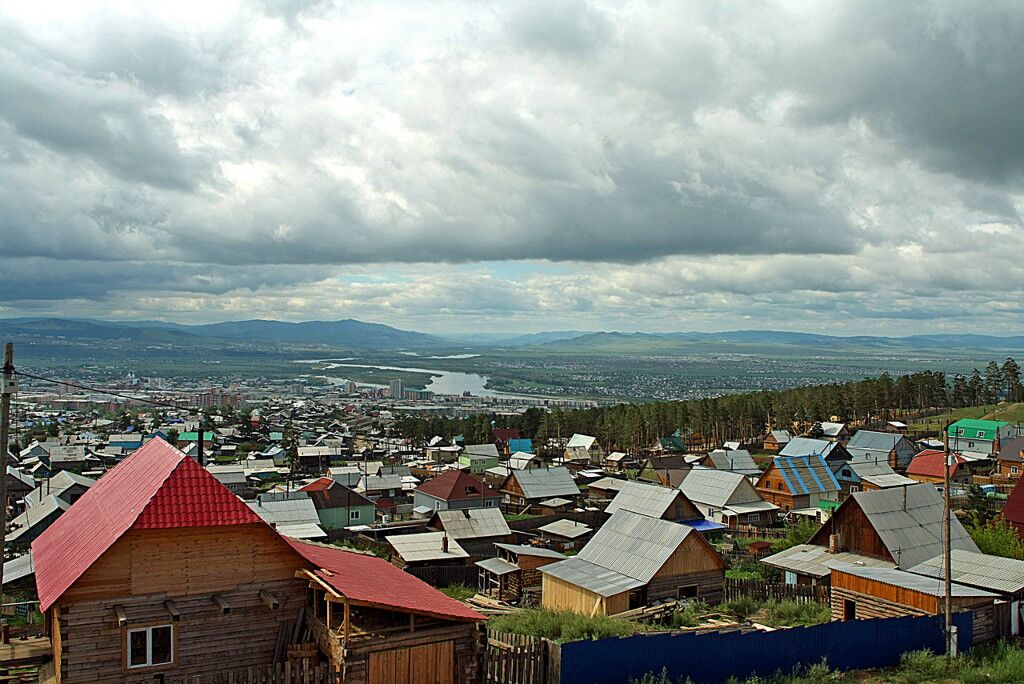
Ulan-Ude, the capital of Buryatia, lies in the south of the republic and has a population of around 400,000. The city grew up along the Uda, a tributary of the Selenga River. Its name comes from the same source: ulan means “red”, while Ude—or Uda—is the river. Put together, it means something like “Red Uda”.
There are no direct flights from Türkiye to Ulan-Ude, so I flew to Baikal International Airport with a Russian airline, changing planes in Novosibirsk. The journey took about eleven hours.
A useful thing to know before arriving is that there is no currency exchange desk at the airport. You can change money at banks in the city, but it is wise to bring at least some roubles with you.
Getting online proved more complicated. Mobile data may be restricted for the first 24 hours after entering Russia, but my eSIM still didn’t work after that. Buying a physical SIM card would have meant getting an official translation of my passport, completing paperwork through the public services system, and registering my biometric details at a bank. I decided it was not worth the trouble. Instead, I relied mostly on Wi-Fi and, inevitably, a VPN. Perhaps these restrictions, brought in during the ongoing war, will disappear if peace returns one day.
Life in Ulan-Ude
The Opera House
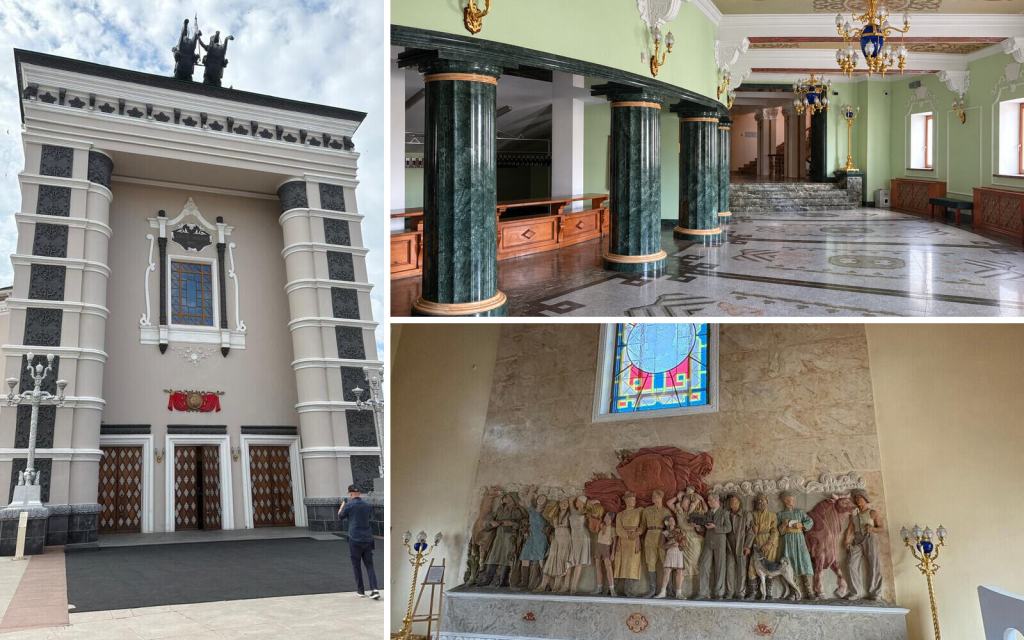
I began exploring Ulan-Ude at the Opera House, right in the heart of the city. One of my earliest impressions of Buryatia was how warm and helpful people could be. The attendant at the door was a perfect example. He let me wander around the building on my own and, as I moved from room to room, even switched on the lights ahead of me.
Built in the 1950s during the Stalin era, the theatre hosts both opera and ballet. The building combines the monumental style of Soviet architecture with details drawn from Buryat culture. Its high ceilings, elaborate decoration and huge chandeliers make the interior especially striking.
One of the building’s most interesting features is a relief called Friendship of Peoples, made up of fifteen life-size figures representing different ethnic groups.
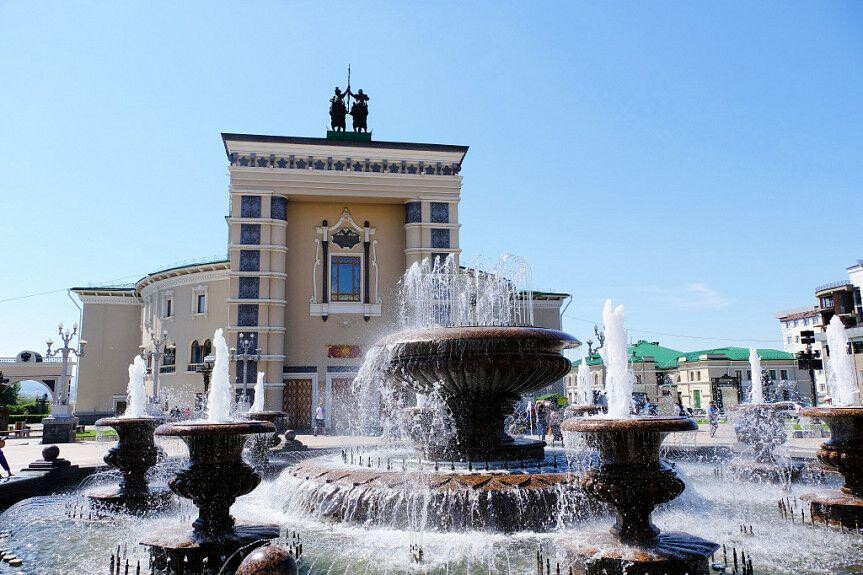
The fountain outside was being restored when I visited, so I never saw it properly. I have included a photograph taken before the work began instead.
Soviet Square and the Lenin Monument
Just across the road, northwest of the Opera House, is Soviet Square. By late afternoon it becomes especially lively, filling with families, children at play and stalls selling souvenirs.
There I met a group of Buryat women in traditional dress, clearly in the middle of a celebration. They spoke no English, and I spoke neither Russian nor Buryat, so I never found out what the occasion was. It did not really matter. We smiled, exchanged good wishes and posed for a photograph together.
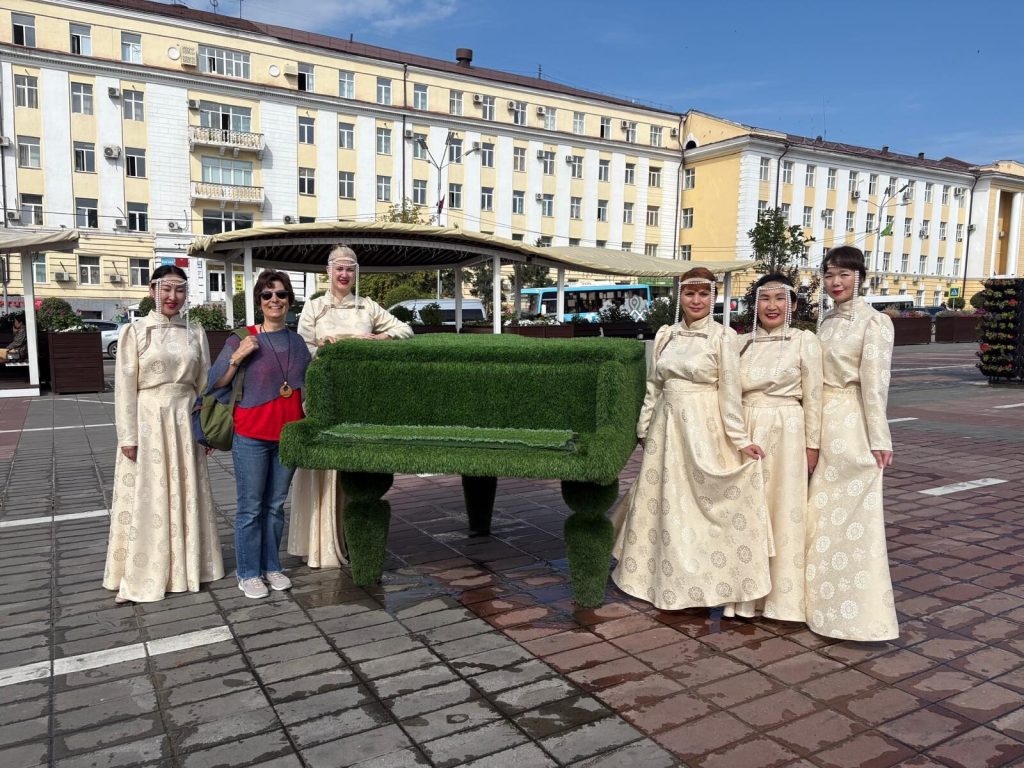
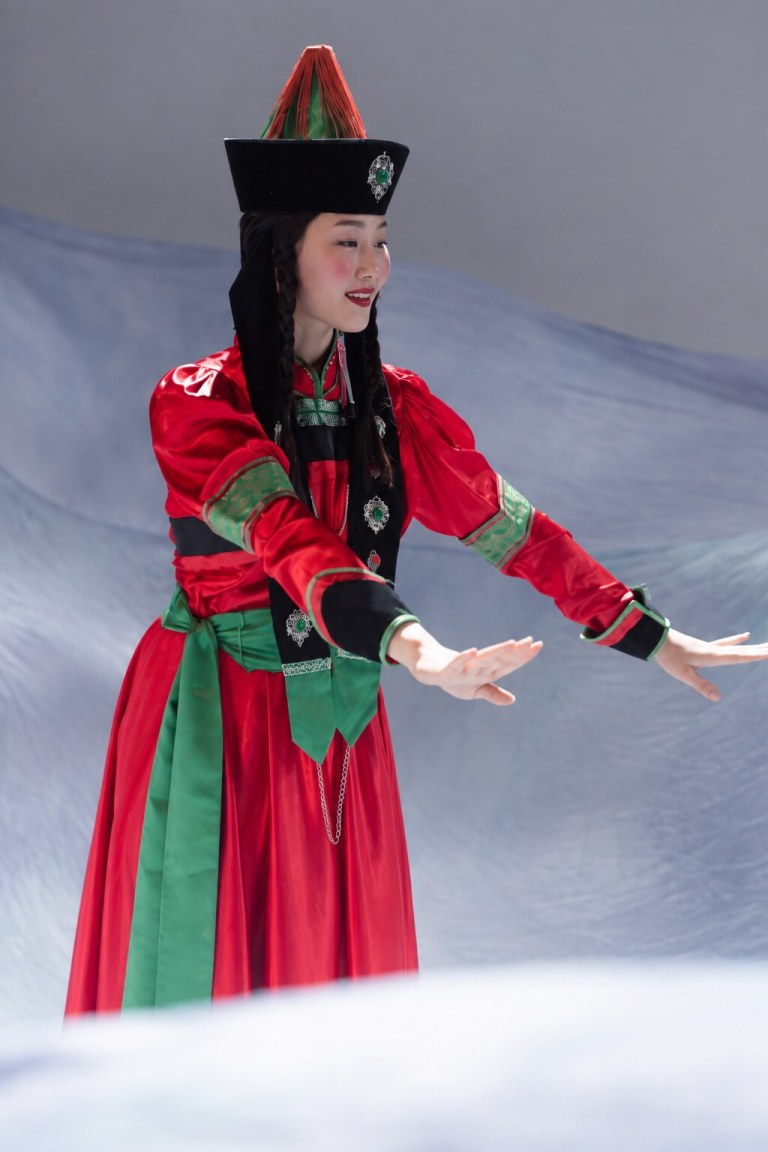
Their headdresses and forehead ornaments immediately caught my eye. Strings of stones hung down on either side, framing their faces. Head ornaments are an important part of traditional dress in this region, although their designs vary from one community and tradition to another. I have included another example for comparison. Here, the upper section represents the sky (tengeri), the red tassels the rays of the sun (naran), and the lower section the earth (gazar).
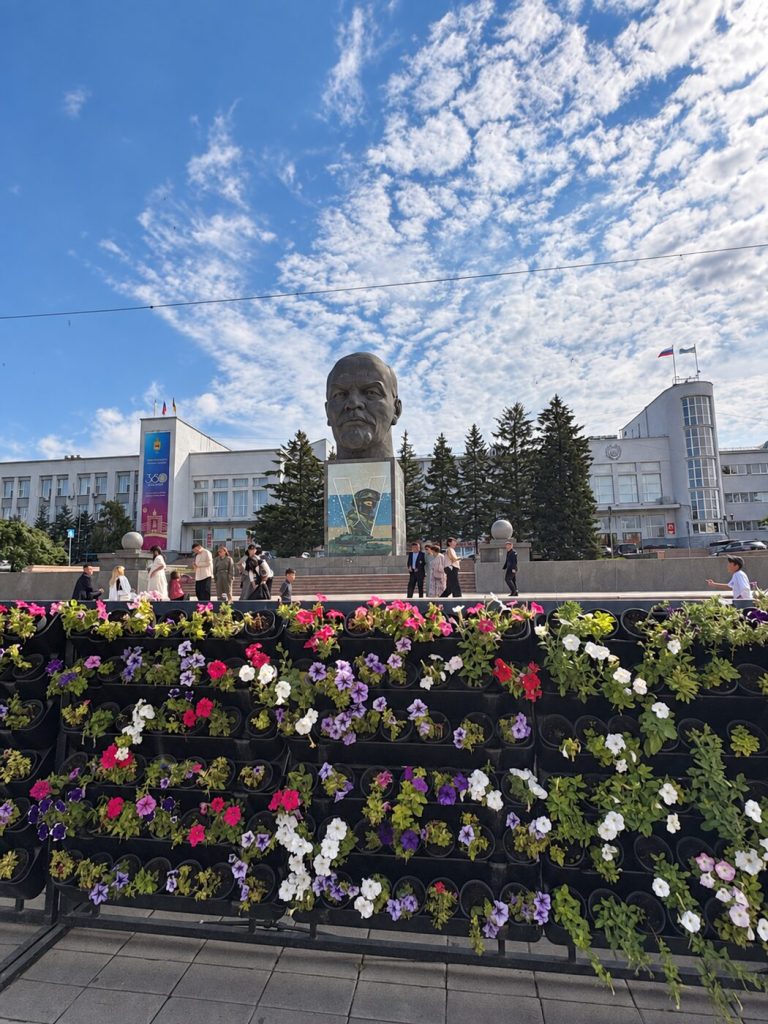
Nothing in Soviet Square, however, attracts more attention than the enormous head of Lenin. Said to be the largest monument of Lenin’s head anywhere in the world, it weighs 42 tonnes and stands 7.7 metres tall—or 14 metres with its pedestal. Unveiled in 1971, it looms in front of the Government Building of the Republic of Buryatia.
Arbat
Like many cities in the former Soviet world, Ulan-Ude has an Arbat. The name is commonly given to a pedestrian street at the centre of city life, usually lined with cafés and shops and animated by street performers. Unfortunately, this part of Ulan-Ude was also undergoing major restoration when I was there.
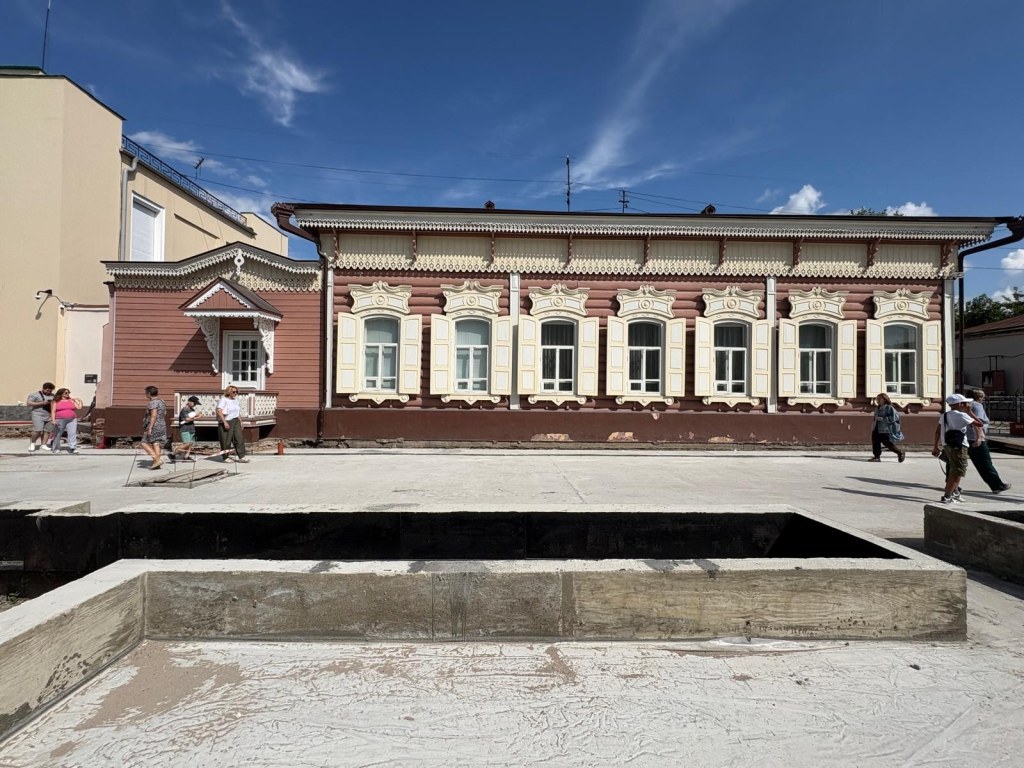
Ulan-Ude once flourished as a trading centre between Russia, China and Mongolia. Around Arbat, many of the old merchants’ houses still survive, their façades decorated with elaborate stonework and woodcarving. Stately stone buildings stand side by side with traditional Siberian wooden homes.
It was the wooden houses that fascinated me most. Fine carving surrounds the windows and runs along the edges of the roofs—a style often described as “Siberian lace”. Frames painted in vivid blue, turquoise and green give each house its own character.
I kept seeing these houses throughout Buryatia, particularly in the villages. The old stone merchants’ mansions tell a different story, their ornate façades reflecting nineteenth-century Russian urban architecture.
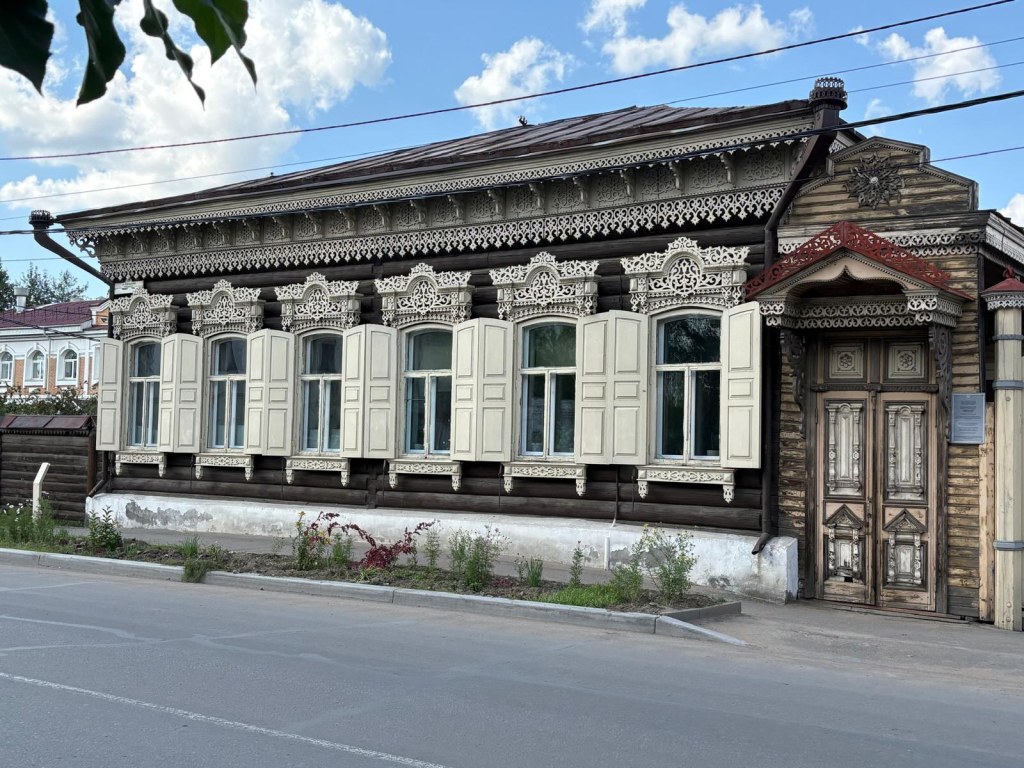
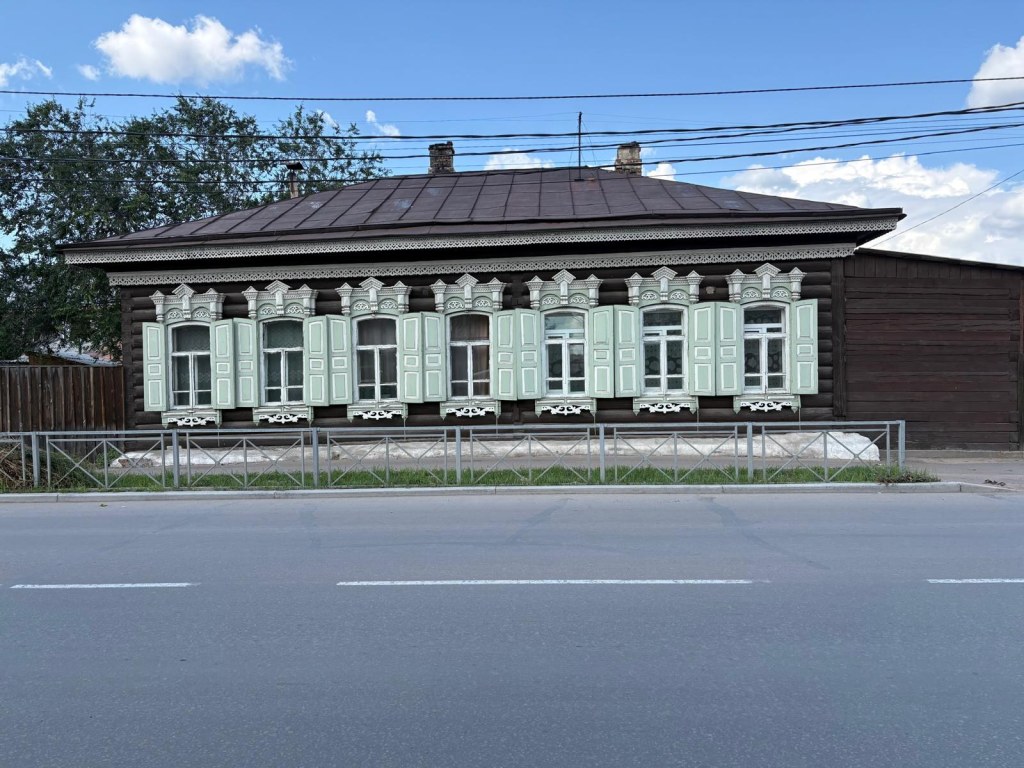
Traditional wooden houses in Ulan-Ude
The National Museum of the History of Buryatia
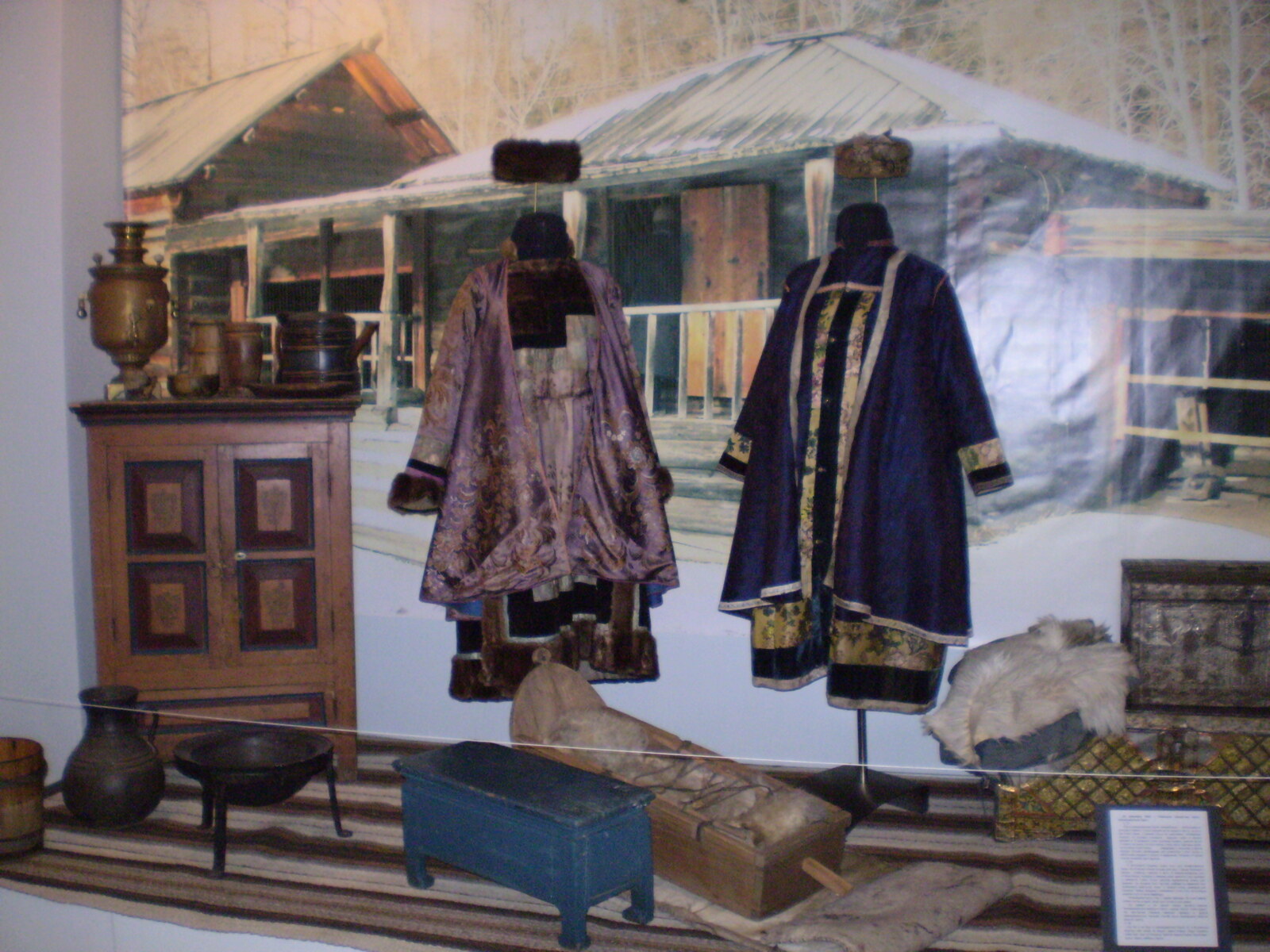
The National Museum of the History of Buryatia is a fifteen-to-twenty-minute walk from Soviet Square. Its collections range from Buddhist art to objects reflecting the region’s local culture.
The second floor is devoted largely to Buddhist paintings, sculptures and ritual objects. As I mentioned earlier, Buddhism and older animistic and shamanic beliefs have lived side by side in Buryatia for centuries, sometimes blending into one another. For me, the museum was especially interesting because it brought these different strands of Buryat culture together in one place.
Downstairs, the focus shifts to the Soviet period, everyday objects and ethnographic material from Buryatia’s past.
The Shaman Mountains and Geser’s Resting Place
On my third day in Ulan-Ude, my dear friend Dina—who was also our guide—drove from Irkutsk to collect me. With her car, we could finally leave the city centre and begin exploring the surrounding countryside.
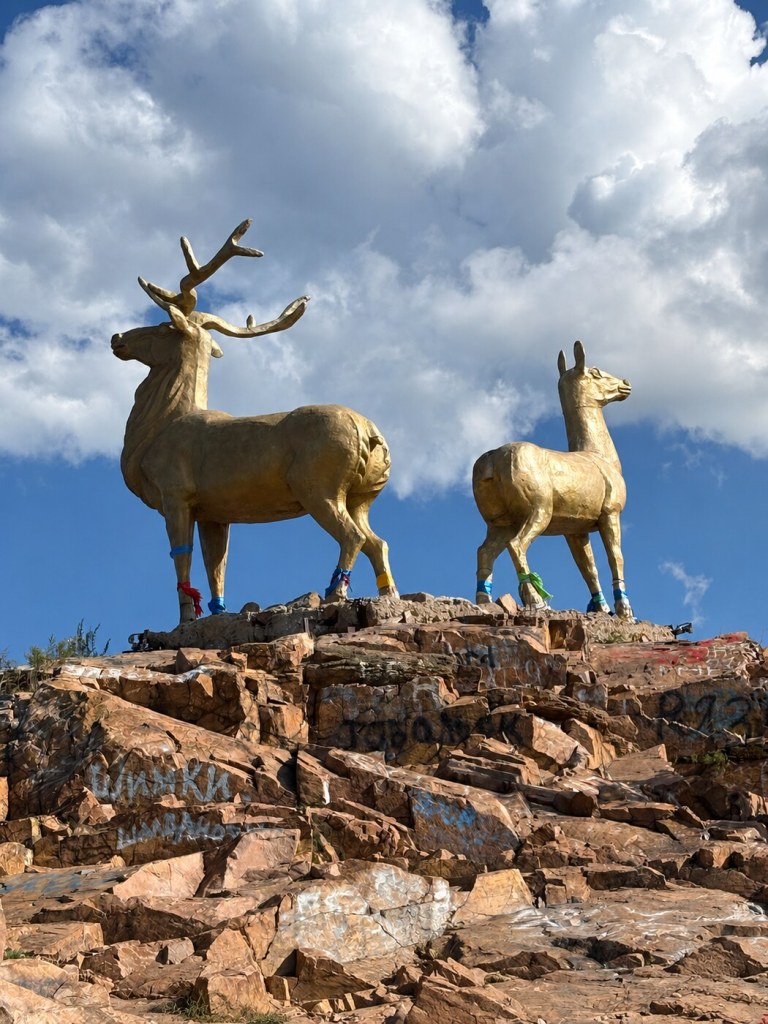
One of our first stops was about twenty kilometres outside the city, at the Shaman Mountains and Geser’s Resting Place, high above the Selenga River.
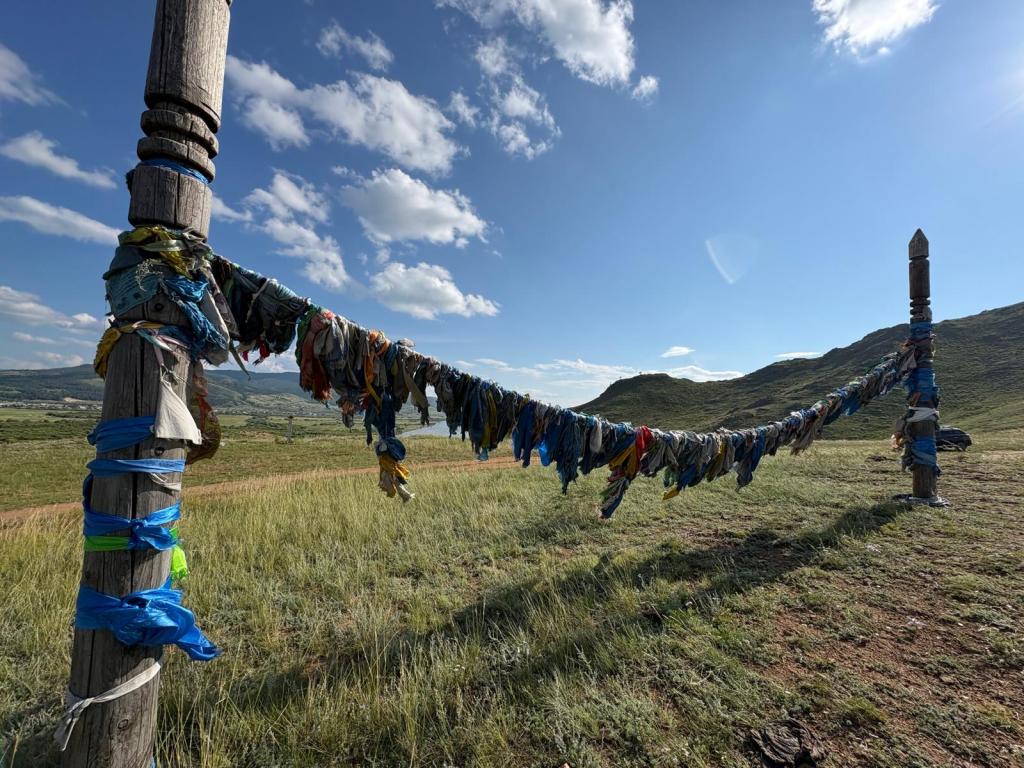
Geser Khan is one of the great heroes of Buryat and Mongolian mythology. Legend says he was sent to earth to restore order and defend people from monsters and malevolent forces. He is also a sacred link between the sky and the earth.
The hill known as Geser’s Resting Place is believed to be where he tethered his celestial horses before continuing his journey. It remains a sacred place where shamanic rituals are held, marked by two golden deer statues.
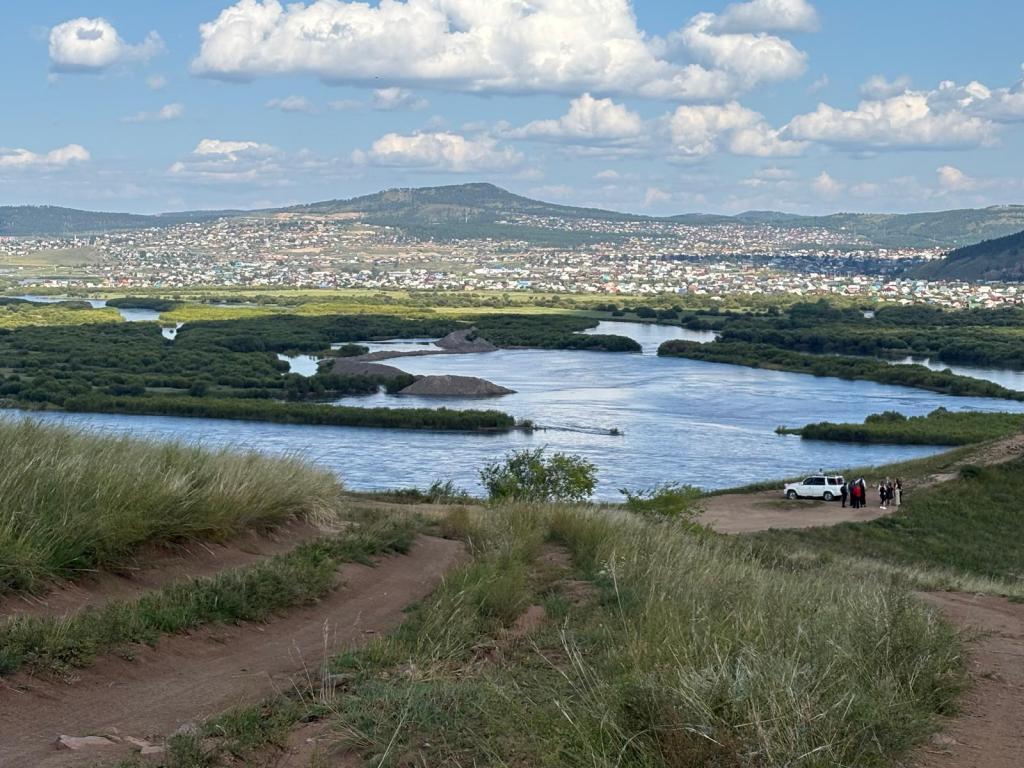
What stayed with me most, though, was the view. From the top, the Selenga River winds through a wide valley stretching out below.
Ivolginsky Datsan
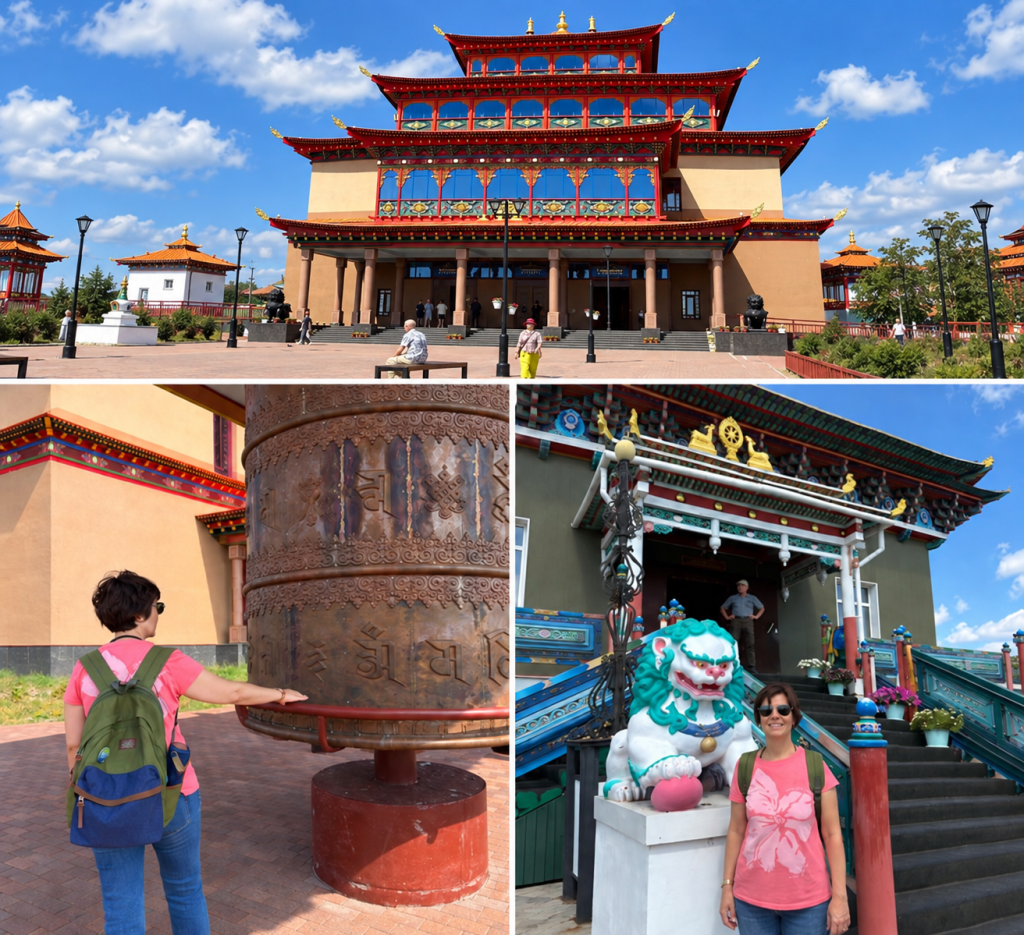
Buddhism is part of everyday life in Buryatia, and temples can be found throughout the region. Buddhist monastic complexes are known as datsans. Ivolginsky Datsan, about forty kilometres from Ulan-Ude, is the most important of them all.
During the Soviet Union’s anti-religious campaigns of the 1930s, Buddhist temples across the region were closed. Many lamas were arrested, exiled or sent to labour camps. Policy softened slightly towards the end of the Second World War, and in 1945 permission was granted for a new Buddhist temple in Buryatia. What began as a small wooden building gradually expanded into today’s large monastery complex, with numerous temples, sacred spaces, schools and administrative buildings.
One of the most remarkable figures associated with the monastery is Hambo Lama Dashi-Dorzho Itigelov.
In 1927, Itigelov sat down to meditate in the lotus position and died during the meditation. Buddhists believe that he did not die in the ordinary sense, but entered an exceptionally deep meditative state. Following his instructions, he was buried in the lotus position. When his body was exhumed seventy-five years later, in 2002, it was found to be extraordinarily well preserved. This made Itigelov one of the most revered figures in Buryat Buddhism. His body is now kept in a temple built especially for him within the monastery.
Prayer wheels known as khurde are everywhere in the monastery. Inside each cylinder are rolls of thin paper covered with sacred mantras. Visitors walk clockwise around the complex, turning the wheels in the same direction as they go. In Buddhist tradition, spinning a prayer wheel is believed to have the same spiritual value as reciting the mantras inside.
I followed the other visitors, walking clockwise and turning each khurde as I passed. Only a few days into my stay, I was already beginning to glimpse the spiritual world that would shape the rest of the journey: shamanic sacred places and the legend of Geser on one side, Buddhist temples and prayer wheels on the other—all closely intertwined.