
After a long and tiring journey, we reached the Kurumkan district. The shaman Nadya joined us along the way, and together we continued north through the Barguzin Valley to Alla Village, where we settled into the guesthouse beside the home of the shaman Larissa.
About 55 kilometres northeast of Kurumkan, Alla is a small village tucked between the Alla and Sukhotka rivers at the foot of the Barguzin Mountains.
The Evenks and the Village Museum
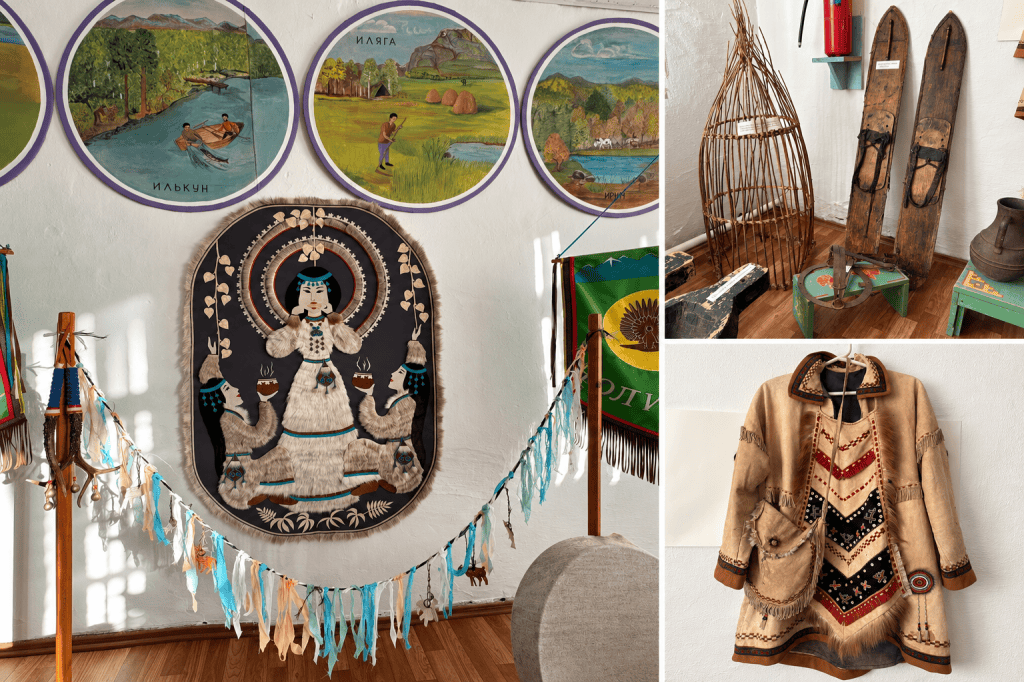
Alla is home not only to Buryats but also to the Evenks, one of Siberia’s Indigenous peoples, referred to in older sources as the Tungus. The Evenks are a Tungusic people whose homeland stretches across a vast area of Siberia and the Russian Far East. Hunting and reindeer herding have traditionally played a central role in their way of life.
The village also has a small Evenki Museum. Set up much like an ethnographic museum, it displays traditional clothing, household objects, tools and musical instruments.
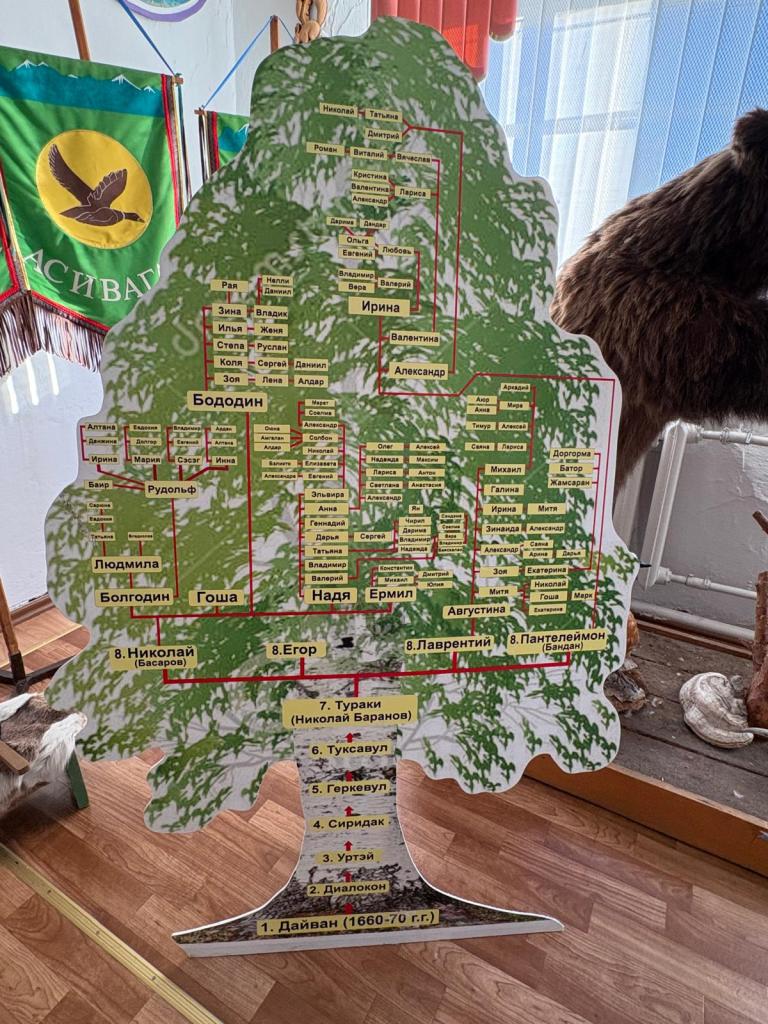
What fascinated me most was an Evenki family tree reaching all the way back to the seventeenth century. Seeing families and generations traced across several centuries was remarkable. Given the importance of ancestors in this culture, perhaps it was not surprising to find such a detailed record here.
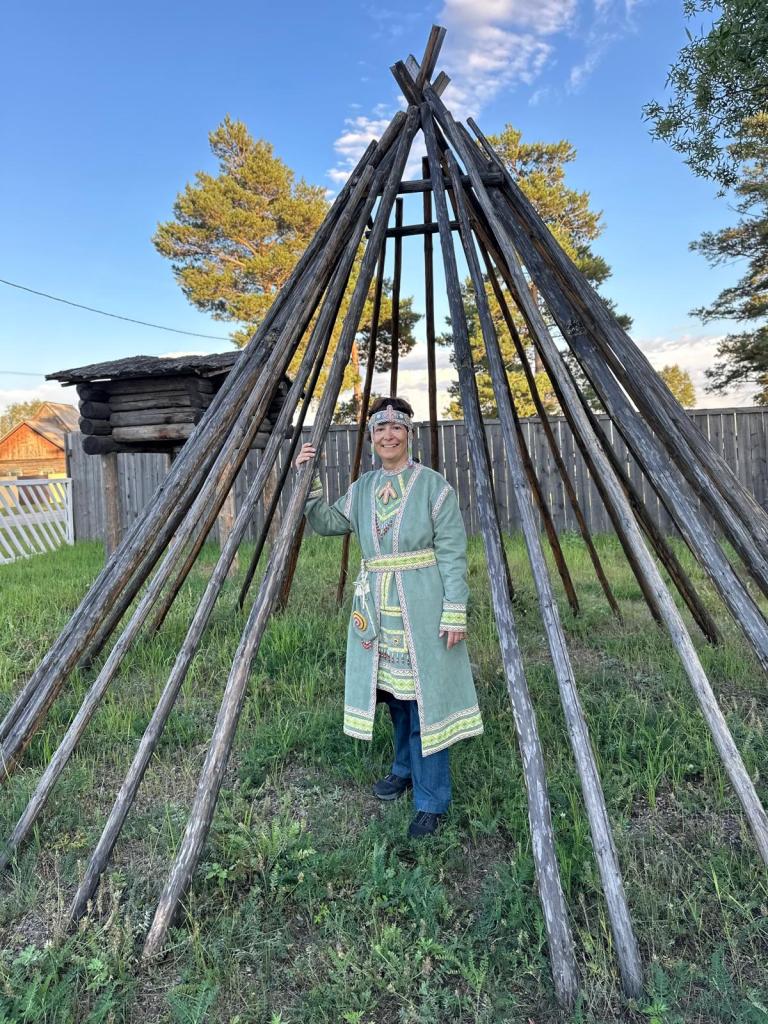
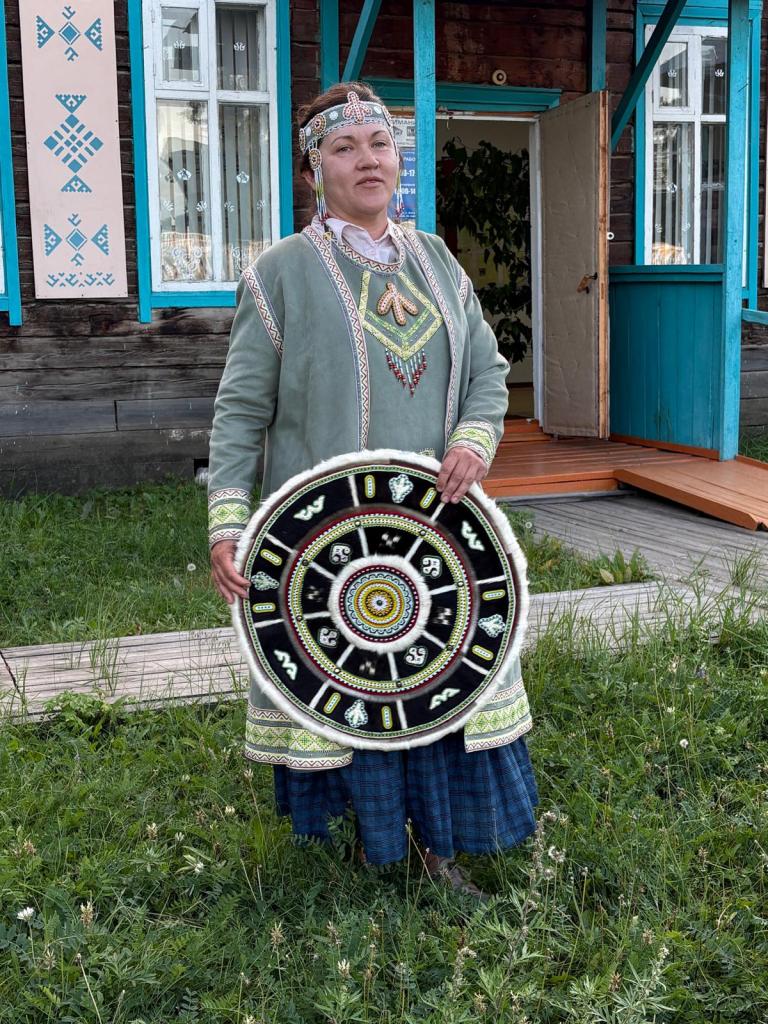
At the end of our visit, the museum staff dressed Dina and me in traditional Evenki clothing and invited us to take photographs. The museum visit gave us not only new insights, but also some wonderfully colourful photographs to remember it by.
Arshan — The Hot Springs
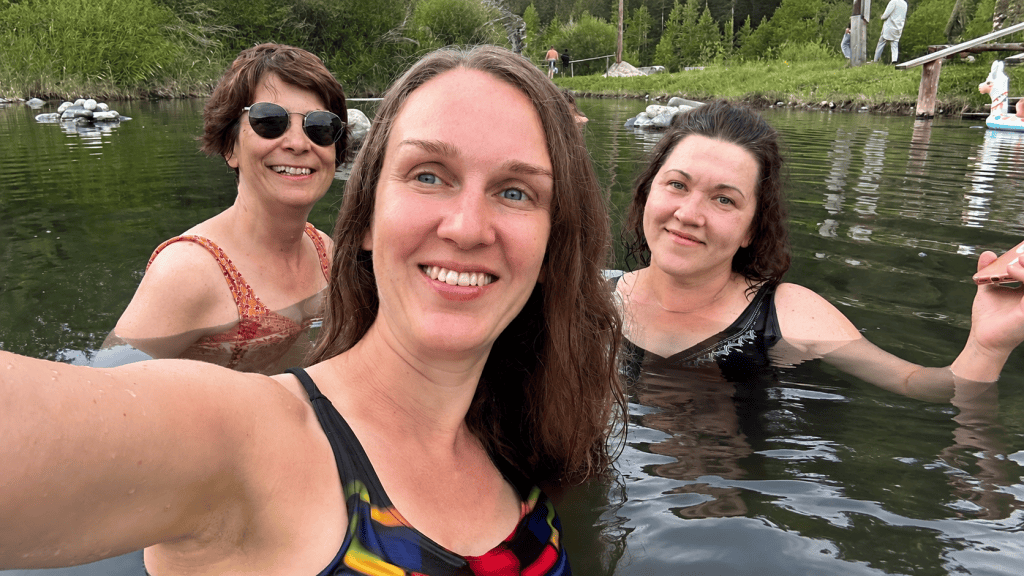
In Buryat, arshan means a healing mineral spring or hot spring. Alla is known in part for the thermal springs about eight kilometres west of the village, at the foot of the Barguzin Mountains.
The springs are very hot and rich in minerals. As soon as you approach them, you notice the distinctive smell of hydrogen sulphide. Traditionally, people have used these waters for their supposed benefits in musculoskeletal, neurological and skin conditions.
One of the springs we tried was an outdoor pool with water at about 45°C. Sitting in the hot mineral water, surrounded by nature with the Barguzin Mountains rising before us, felt wonderful.
On another day, we tried one of the indoor springs. These are small pools inside wooden cabins, with room for only three or four people. The water was far hotter than in the outdoor pool, so we were told not to stay in for more than seven minutes. Afterwards, we had to take particular care not to get cold.
On the evenings after our visits to the springs, we all slept deeply and peacefully.
Village Life
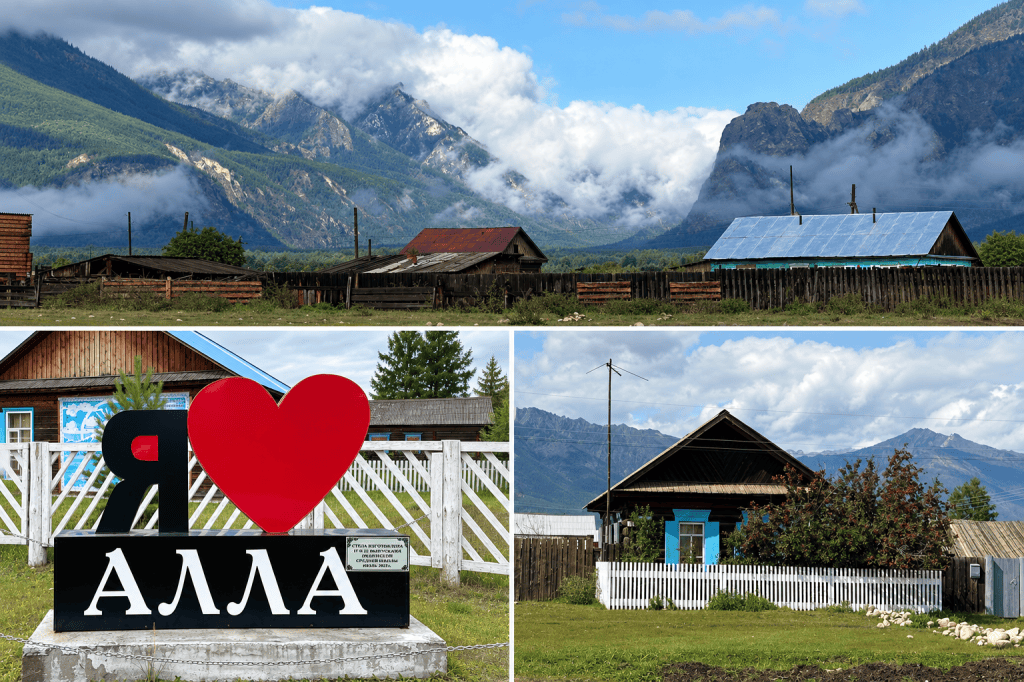
I was deeply moved by the calmness and warmth of the people I met in the Barguzin Valley. Although we did not share a language, at times we seemed to understand one another as if we did. I do not know whether this came from living so close to nature or from being far removed from the pressures of big cities and modern life. But life here felt simpler, and human connections warmer.
Thanks to the hospitality of Larissa and Nadya, the shamans who welcomed us into their homes, my time in the village became one of the loveliest parts of the journey.
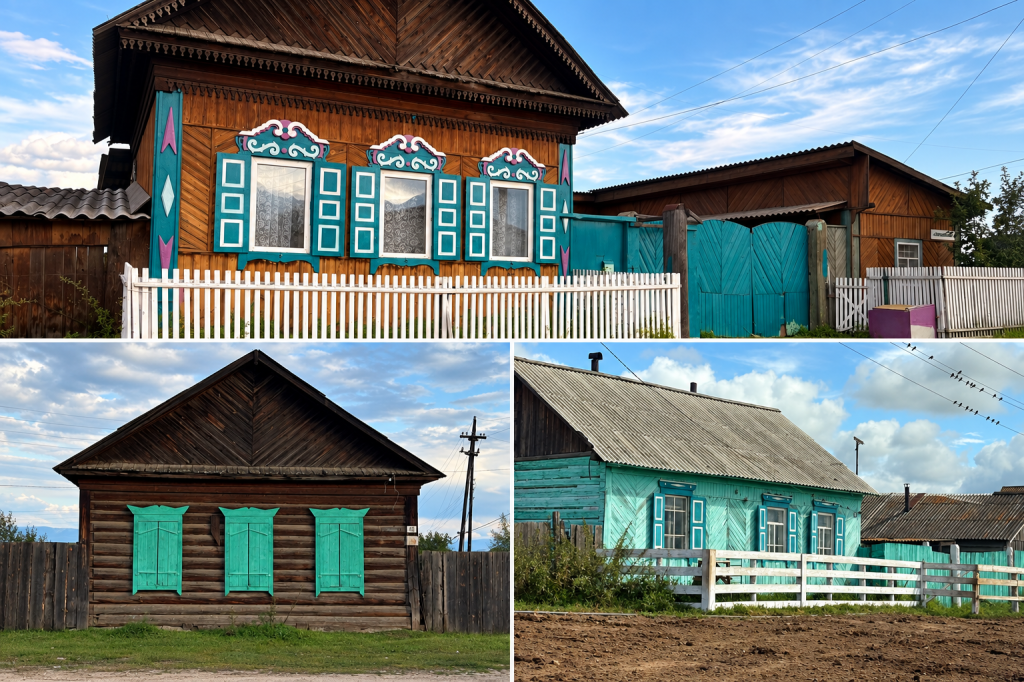
Most of the houses were wooden and reflected the style of traditional Buryat village homes. Blue and green shutters, carved as delicately as lace, gave them a special charm. With no natural gas in the villages, the houses are heated by large wood-burning stoves. A mass of stone around the stove retains heat, keeping the house warm even after the fire has died down. In traditional homes, the bathroom and toilet are in separate structures in the garden.
Breakfast brought traditional cottage cheese, cream, milk, eggs and honey to the table. Meat from locally raised animals and fish were the mainstays of other meals. Since Olesya and I are vegetarian, there was always cabbage, potatoes, squash purée and other vegetables for us as well. Even buuz, the region’s traditional dumplings, were prepared with cottage cheese especially for us.
Tea has a special place in everyday Buryat life. It is usually taken with milk, and at least three times a day everyone gathers around the table again for “tea time.” These are not the brief tea breaks we might imagine; each one feels almost like a full meal.
Around the villages, in the mountains and all along the valley, we came across places considered sacred. People leave offerings to nature and the spirits there and say their prayers. In this landscape, the boundaries between everyday life and belief, and between people and nature, seem to blur.
The Meaning of Stones in Animism and the Banya Ritual
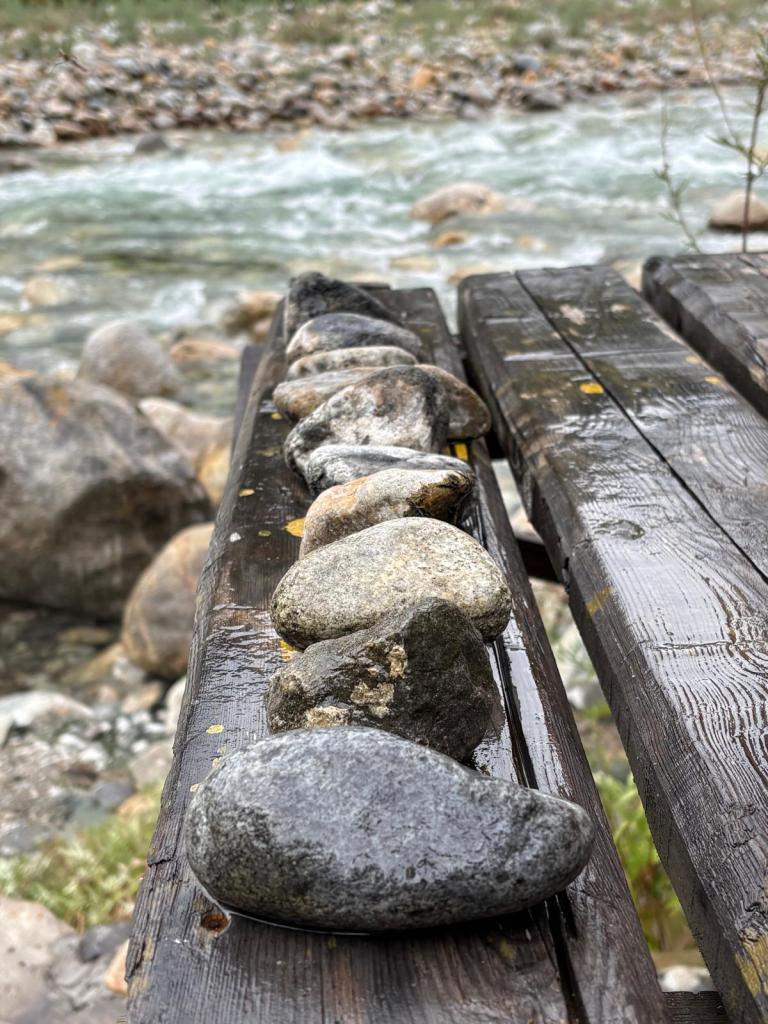
As I mentioned at the beginning of this journal, stones hold a special place in this culture. When I asked why, Dina explained that because stones endure for so long without disappearing or changing, they are believed to witness history and preserve the memory of what has happened. One practice I encountered was collecting stones from sacred places and using them in the banya.
The banya stands in a separate building in the garden of a village house and reminded me somewhat of a Turkish bath. Stones are heated inside to create a hot, steamy atmosphere. Stones brought from sacred places are heated as well; water is poured over them and the rising steam is inhaled. This is believed to cleanse not only the body, but also the spirit.
As Dina explained, this is where the stone’s deeper meaning lies. By taking a stone from a sacred place, you are believed to carry a piece of that place with you and reconnect with it during the banya.
The Other Side of Lake Baikal
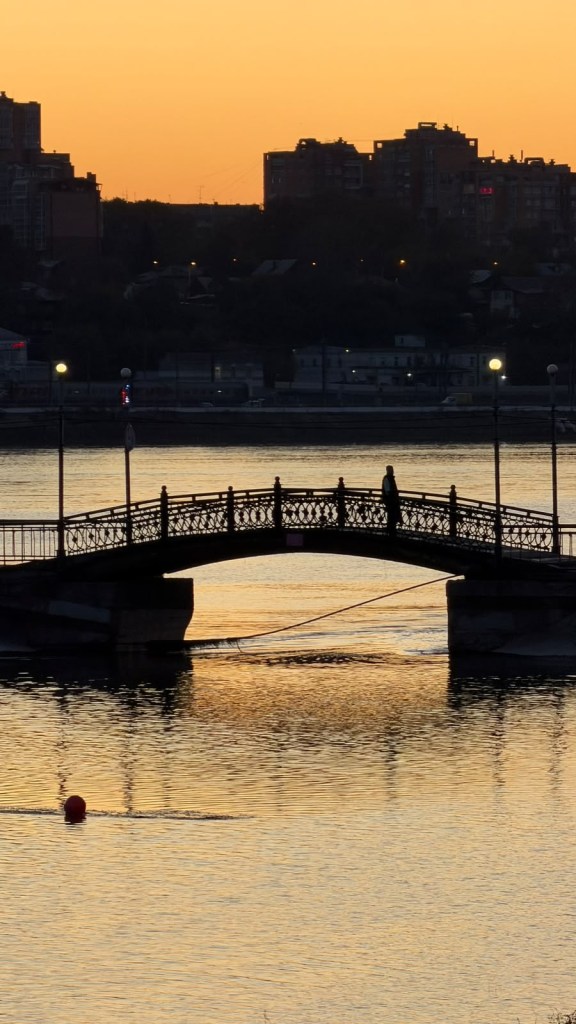
Our journey took us through the Barguzin Valley on the eastern side of Lake Baikal. Dina told me that the western shore and the area around Irkutsk were also well worth seeing, and shared this photograph she had taken of the Angara River. Who knows—perhaps my next journey will take me to Baikal’s western shore.
The Journey Home
After a week, it was time to say goodbye. We set off once more for Ulan-Ude, where I would begin my journey back to Türkiye. Saying goodbye to Dina, Olesya, Larissa and Nadya was not easy.
As I left Buryatia, I carried with me more than the mountains, valleys and sacred places I had seen, or all that I had learned. What stayed with me most was the warmth and simplicity of the human connections I found in a land that has not yet lost its bond with nature.
I had travelled east of Baikal curious about the world of shamans. I returned carrying far more than I had expected.
Continue to Part Five: Practical Notes for Visiting Buryatia →

