

When I was at school, our history teacher would hang a large map of Central Asia on the board. The story of the Turks’ journey from Central Asia to Anatolia was explained through that map.
As I listened, I would open the world atlas in front of me and look for Ulaanbaatar, the capital of Mongolia. I wondered where this distant city’s unusual name came from.
Years later, when I finally travelled to Ulaanbaatar, I learned the meaning of the name that had intrigued me since childhood. In Mongolian, ulaan means “red” and baatar means “hero”. The city’s name therefore means “Red Hero”.
Although Ulaanbaatar’s history reaches much further back, the city took its present name in 1924, after the Mongolian People’s Republic was established. The name “Red Hero” still carries traces of the political transformation Mongolia was undergoing at the time.
While following the traces of ancient beliefs and shamanic traditions, I learned about the upcoming Tenger World Shaman Festival. I could think of no better reason to visit the city I had turned to again and again in the pages of my childhood atlas. And so I set out for Ulaanbaatar—not merely to see the city whose name had once made me curious, but to witness a gathering of shamans from different parts of the world.
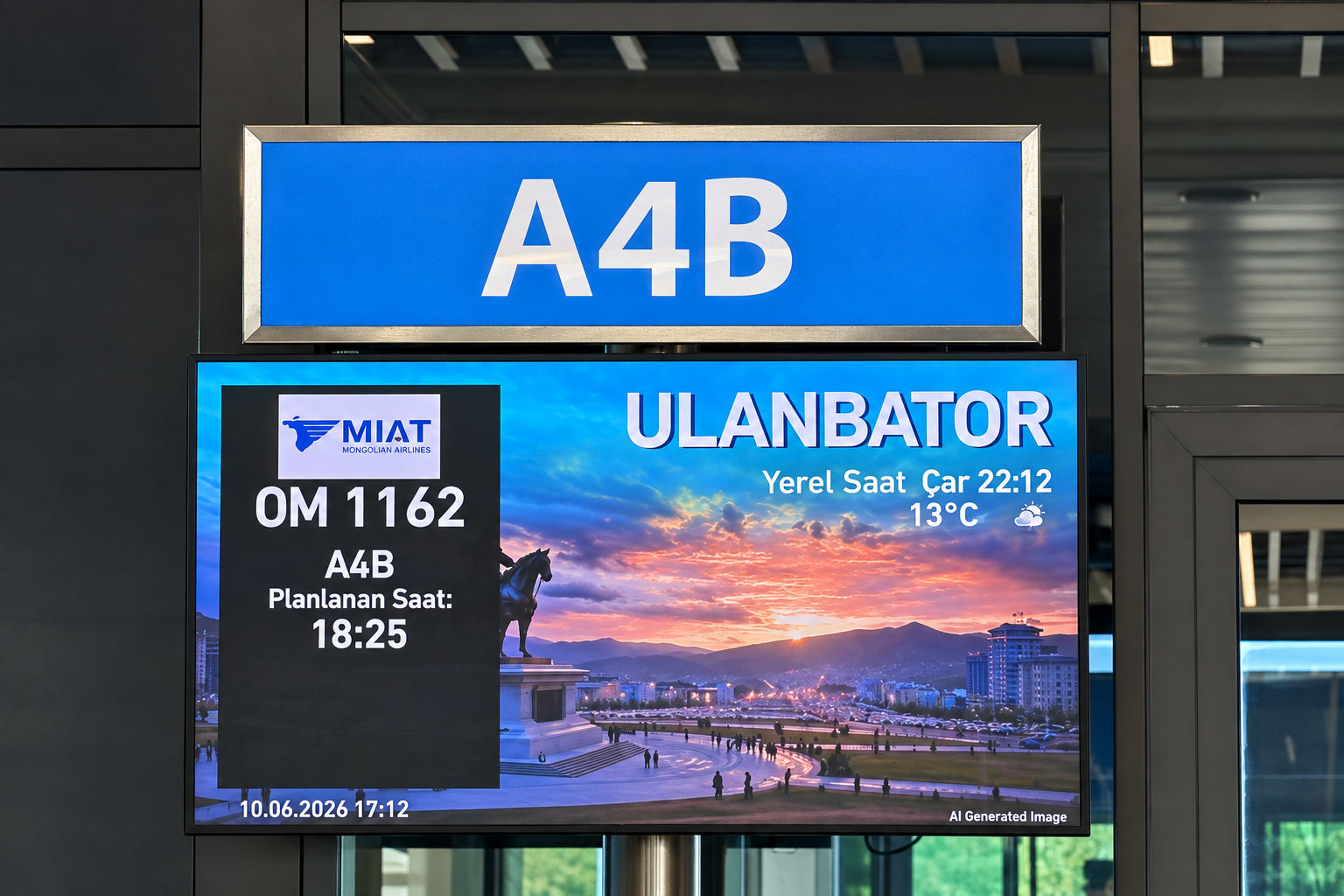
Turkish Airlines operates direct flights from Istanbul to Ulaanbaatar. I took one of them and, after a journey of about eight hours, landed at Chinggis Khaan International Airport.
Before arriving, I had read in several places that Ulaanbaatar’s traffic was extremely heavy, but I had not taken the warnings very seriously. As someone living in Istanbul and travelling between its European and Asian sides every day, I did not expect to be troubled by traffic in a city of fewer than two million people.
I soon realised how wrong I was. The traffic slowed as we approached the city and almost came to a complete standstill once we entered the centre. Our roughly 50-kilometre journey took more than two hours.
I will leave the details of the city for later and first describe the gathering that brought me to Mongolia.
Tenger World Shaman Festival
Held from 12 to 15 June 2026, the Tenger World Shaman Festival brought together shamans from different parts of the world to share shamanic traditions, rituals and cultural heritage. This year’s theme focused on understanding, supporting and accepting autistic people and their families.
The programme included processions, prayers, rituals dedicated to nature and a fire ceremony. The festival was held at Chinggis Khuree Tourism Camp, about 30 kilometres from central Ulaanbaatar. As there was no public transport to the site, I took a taxi. As the city receded, crowded buildings gave way to green open spaces and surrounding mountains.
Ger: Mongolia’s Portable Home
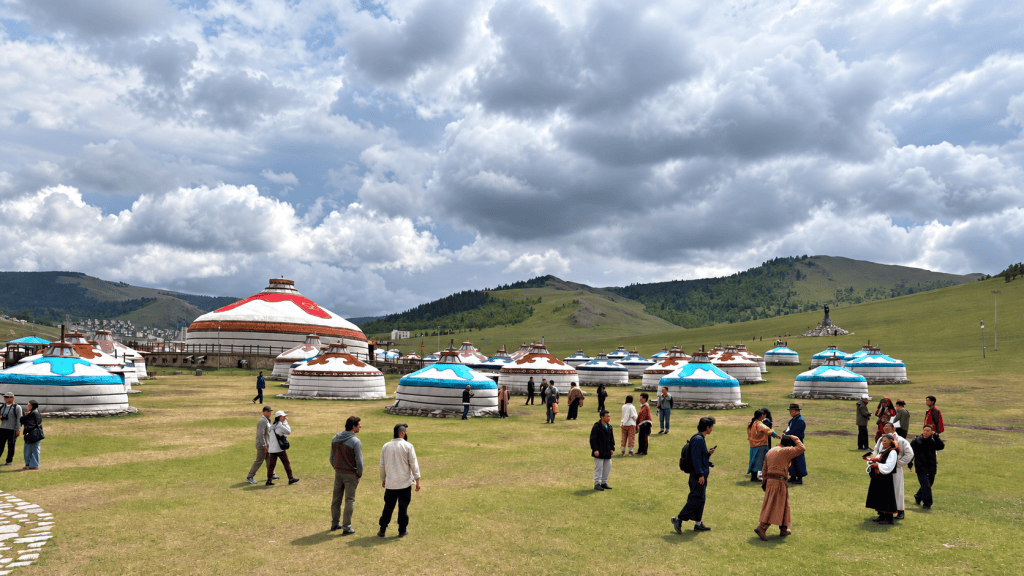
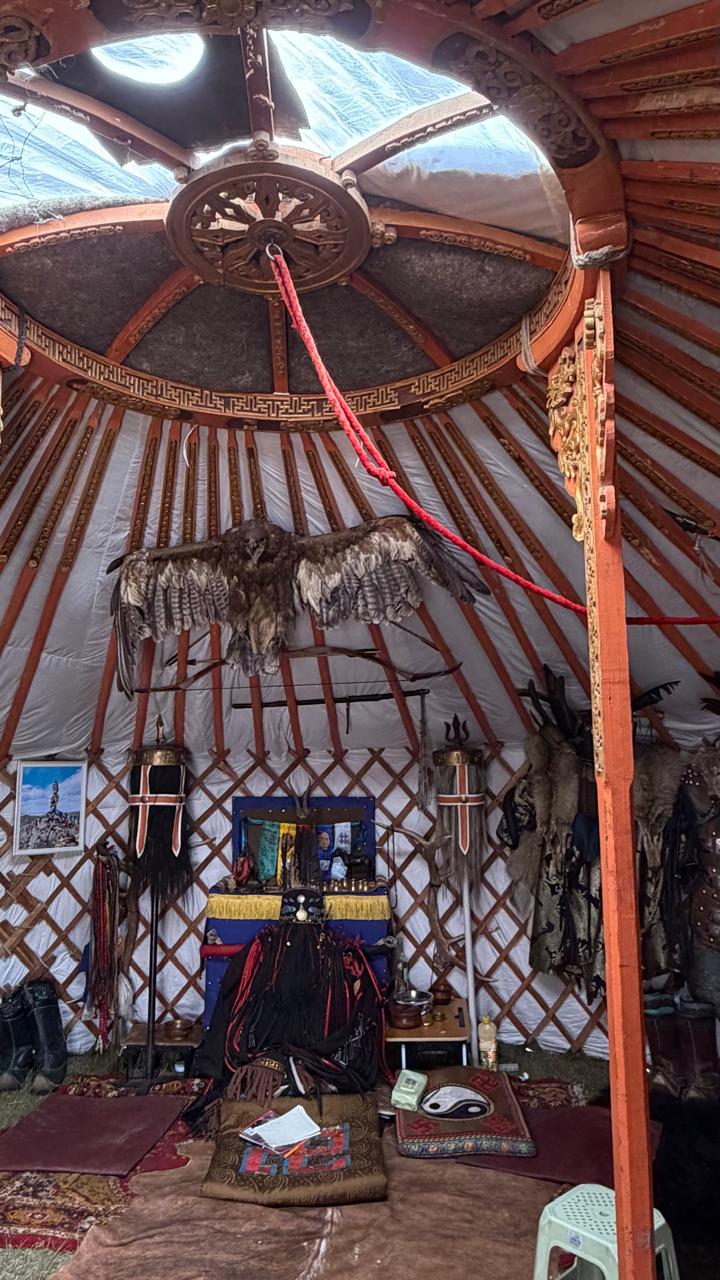
The festival grounds were filled with the round tents that Mongolians call ger and that are widely known elsewhere as yurts.
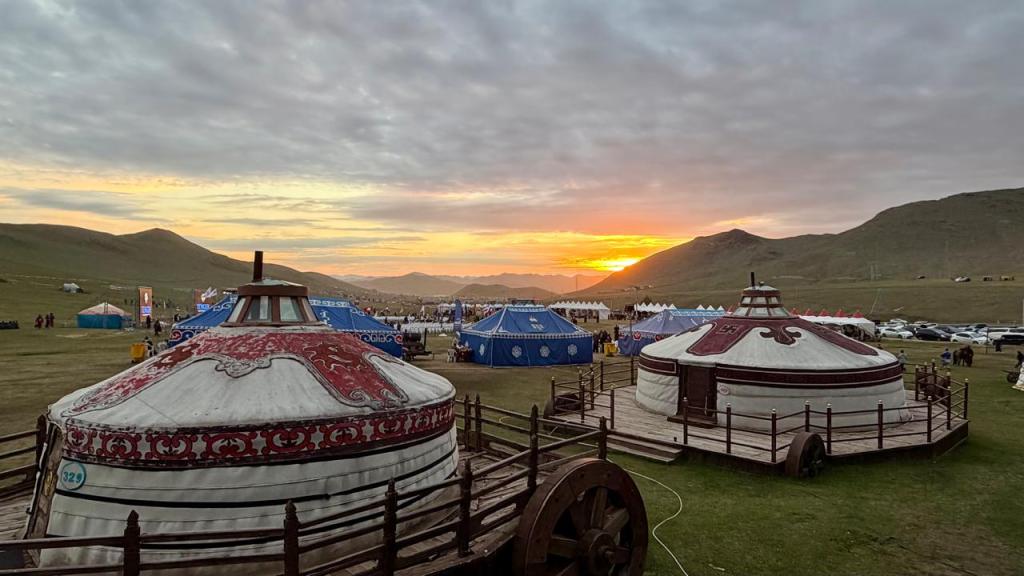
An important part of nomadic life, the ger remains both a living space and a powerful symbol of cultural identity in Mongolia. Although it looks simple from the outside, it contains beds, furniture and a stove at the centre. Some also have a small sacred corner with objects of family value and religious symbols. Families cook, carry out their daily activities and sleep inside. In short, a ger is less a tent than a portable home.
Most festival participants and guests were staying in these gers. I did not have the chance to spend a night in one this time, but I hope to experience it on my next visit.
Horses
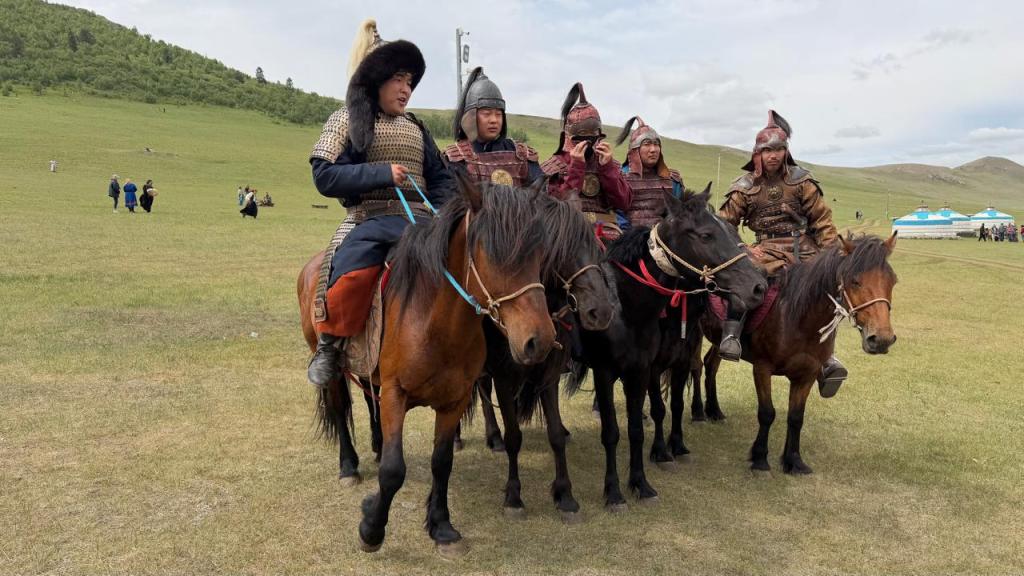
In Mongolia, where nomadic pastoralism remains a strong tradition, horses occupy an important place in both cultural and everyday life. Children learn to ride at a very young age, while horses are often allowed to graze freely in herds across the steppe.
Tenger, Animism and the Role of the Shaman
The word Tenger in the festival’s name means “sky” or “heaven” in Mongolian. Its reference to the sky also evoked the connection between people, nature and the spirit world.
I also wrote about animism in my Buryatia story. Animism is not a single, fixed doctrine practised in the same way everywhere. The beliefs, traditions and rituals of different communities vary. Yet at its heart is the idea that not only people, animals and plants, but also mountains, rivers, valleys and even stones may possess a spirit or spiritual essence. When the natural world is not seen as a collection of lifeless objects, respect and balance become essential to the way people relate to it.
The bond with ancestors is also important. Many animist traditions hold that ancestral spirits continue to exist after death and may protect or influence their families and communities. Rituals are therefore performed to honour them.
A shaman is understood as someone who communicates between people and the spirit world through drums, dance, prayer and other rituals.
Shamanic Clothing
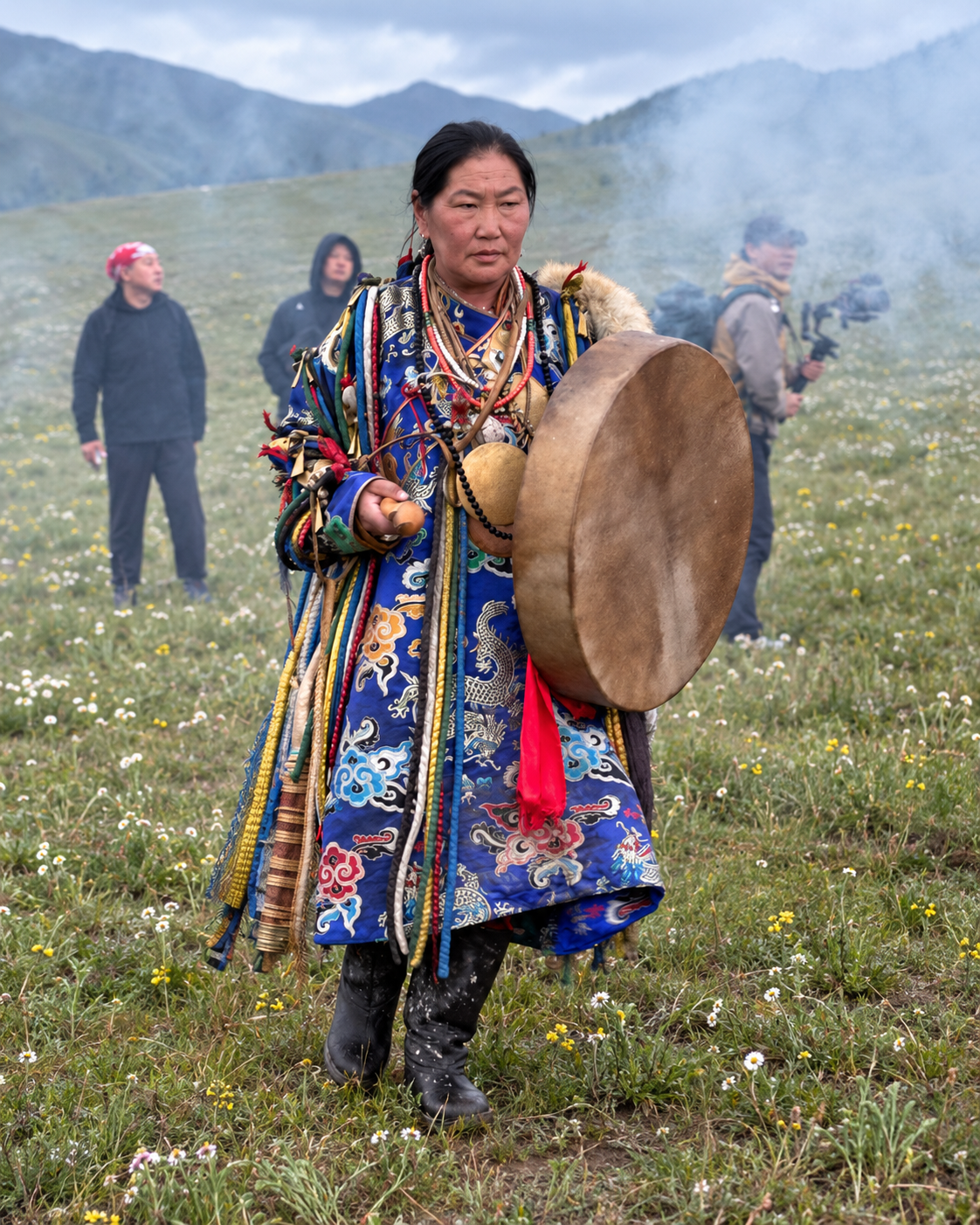
The brightly coloured shamanic clothing I encountered at the festival made me feel as though I had stepped out of everyday life and into a mythological story.
As I approached the grounds, I began to hear the rhythmic sound of bells. Once inside, I realised that the sound came from small bells and metal pieces attached to the shamans’ sleeves and skirts. As they walked and danced, the pieces struck against one another, creating a lively and compelling rhythm.
In some traditions, these sounds are believed to call spirits, protect the shaman and accompany them during trance. I do not know whether there is a real connection, but watching the shamans made me think of the Turkish expression “to have bells on one’s skirt”—used when someone is extremely happy, delighted or overjoyed.
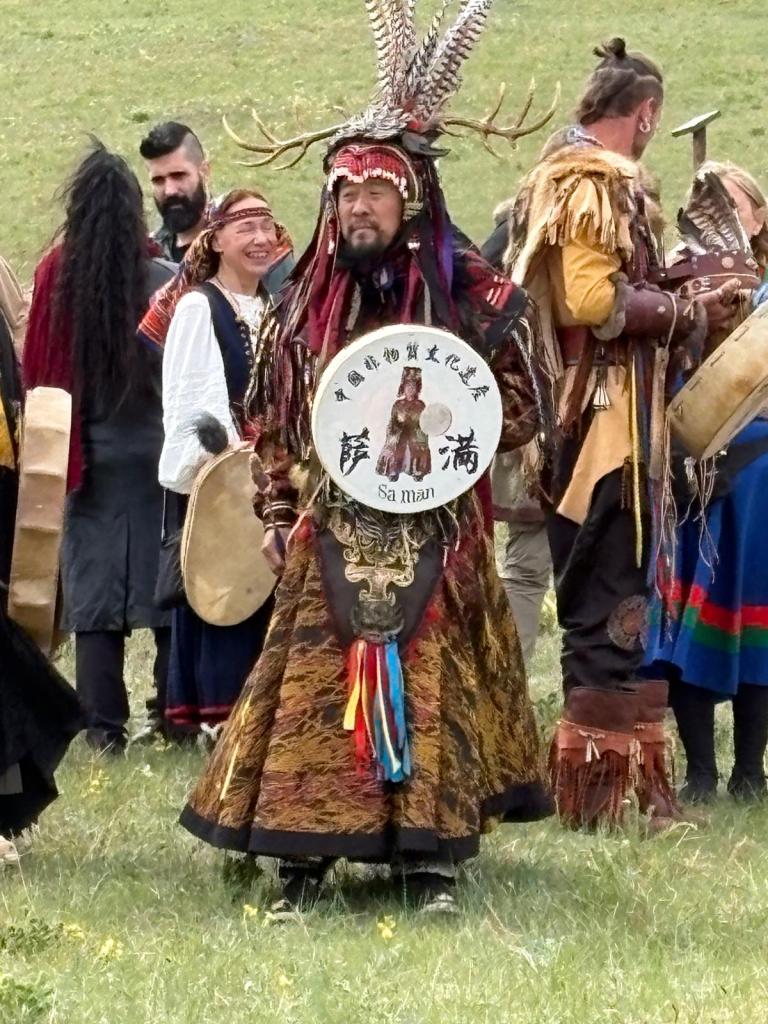
Shamanic clothing varied according to the tradition it belonged to. Still, feathers, furs, horn-shaped pieces and animal figures appeared on many of the garments. Eagles, wolves and bears could represent strength, endurance and protection. Animal imagery also symbolised a connection with spiritual beings believed to guide or assist the shaman.
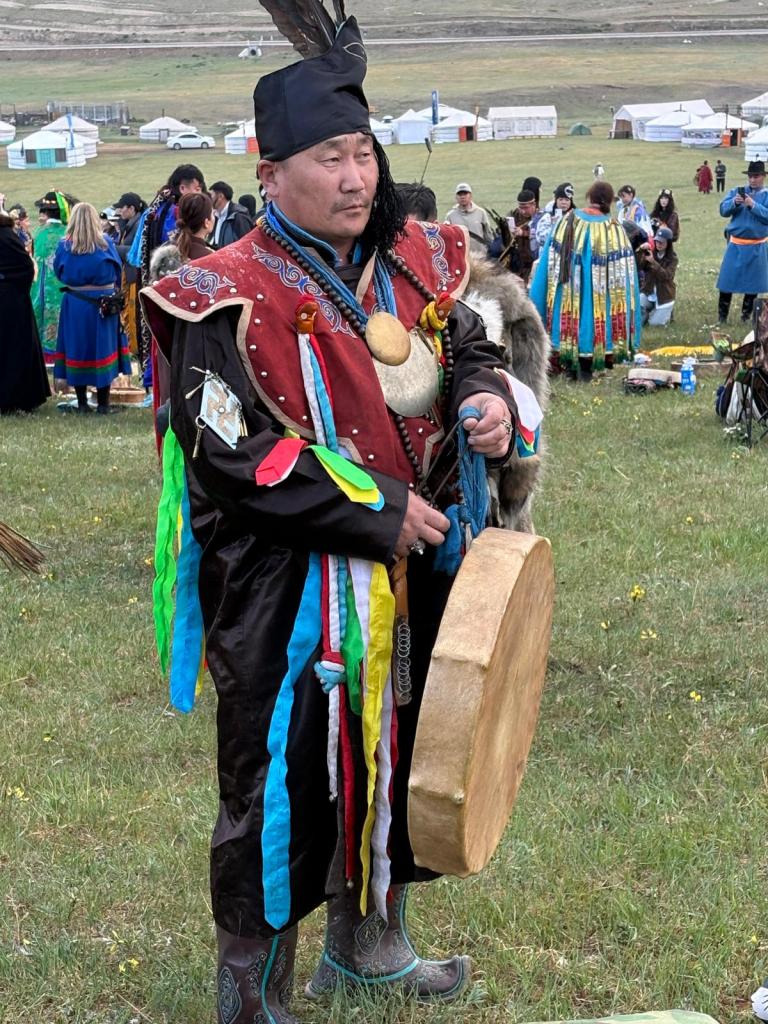
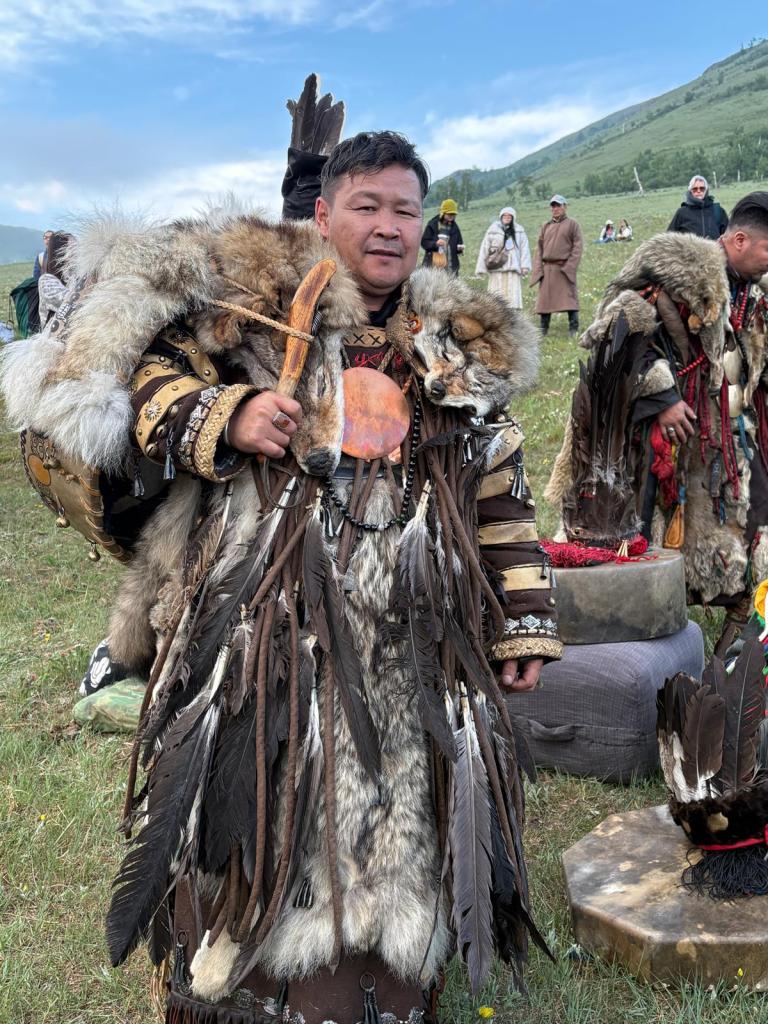
Furs, feathers, coloured ribbons and metal mirrors on shamanic garments
The round metal mirrors worn around the neck or on the clothing of many shamans also caught my attention. They were more than decoration. Known as toli, these mirrors are believed to protect against harmful spirits and negative influences, while also carrying the shaman’s spiritual power.
From animal figures and mirrors to the sounds a garment produced and the way it moved, each outfit told a story of its own.
The Shaman’s Drum
When the ceremonies began, rhythmic drumbeats joined the bells rising from the garments. In many shamanic traditions, the drum is not merely a musical instrument; it is one of the principal tools accompanying the shaman’s communication with the spirit world.
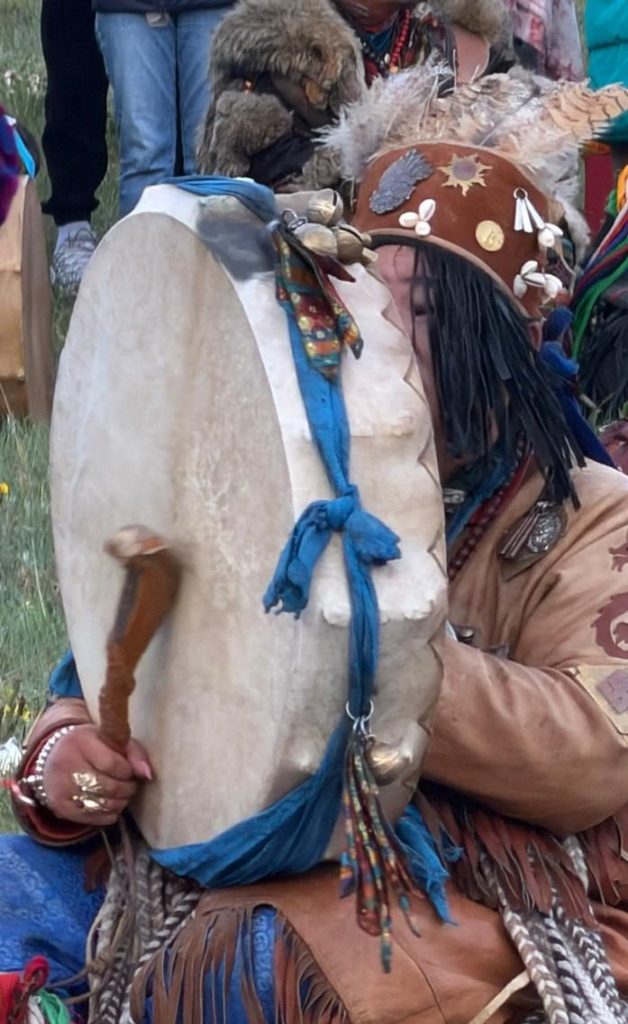
Repetitive rhythm is believed to help the shaman turn away from everyday awareness and enter a trance state. In some traditions, the drum is compared to a horse carrying the shaman between different worlds; in others, it is a way of calling helper spirits and marking the boundaries of the ceremony.
At times, the sounds of drums played with different rhythms blended together. When the bells, prayers and increasingly powerful drumbeats came together, I was not merely watching the ceremony—I could feel its sound and vibration.
The Fire Ceremony
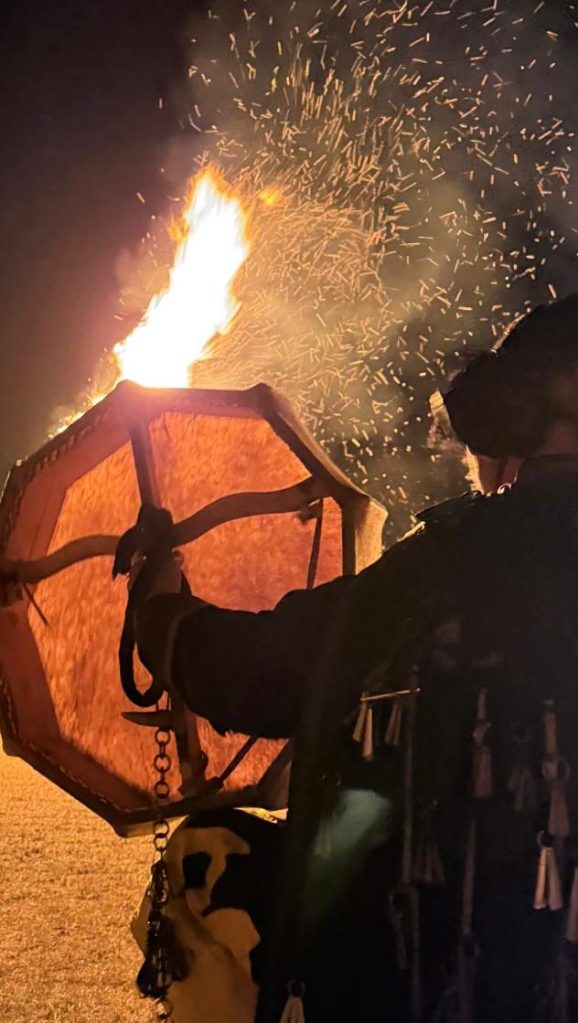
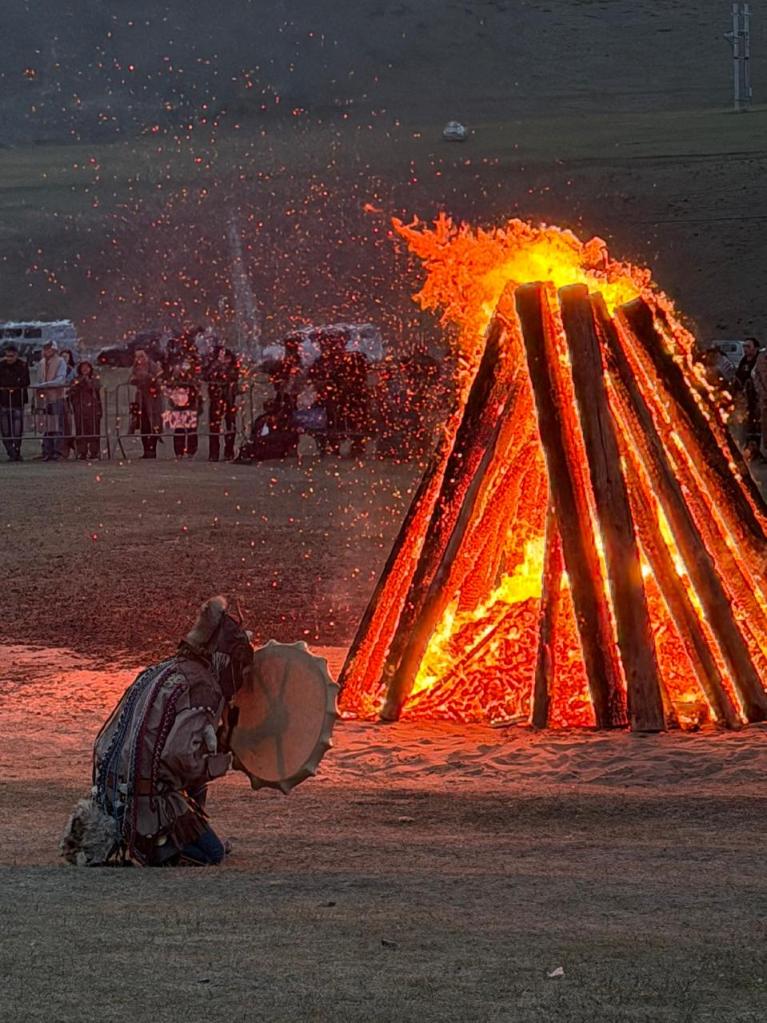
One of the most unforgettable moments of the festival was the fire ceremony held at night. The shamans gathered around a large fire, beating their drums and reciting prayers. The flames rising into the darkness, together with the drumbeats and sparks, created a striking scene.
In many shamanic traditions, fire is seen not only as a source of warmth and light, but also as a symbol of transformation, purification and rebirth.
Sessions
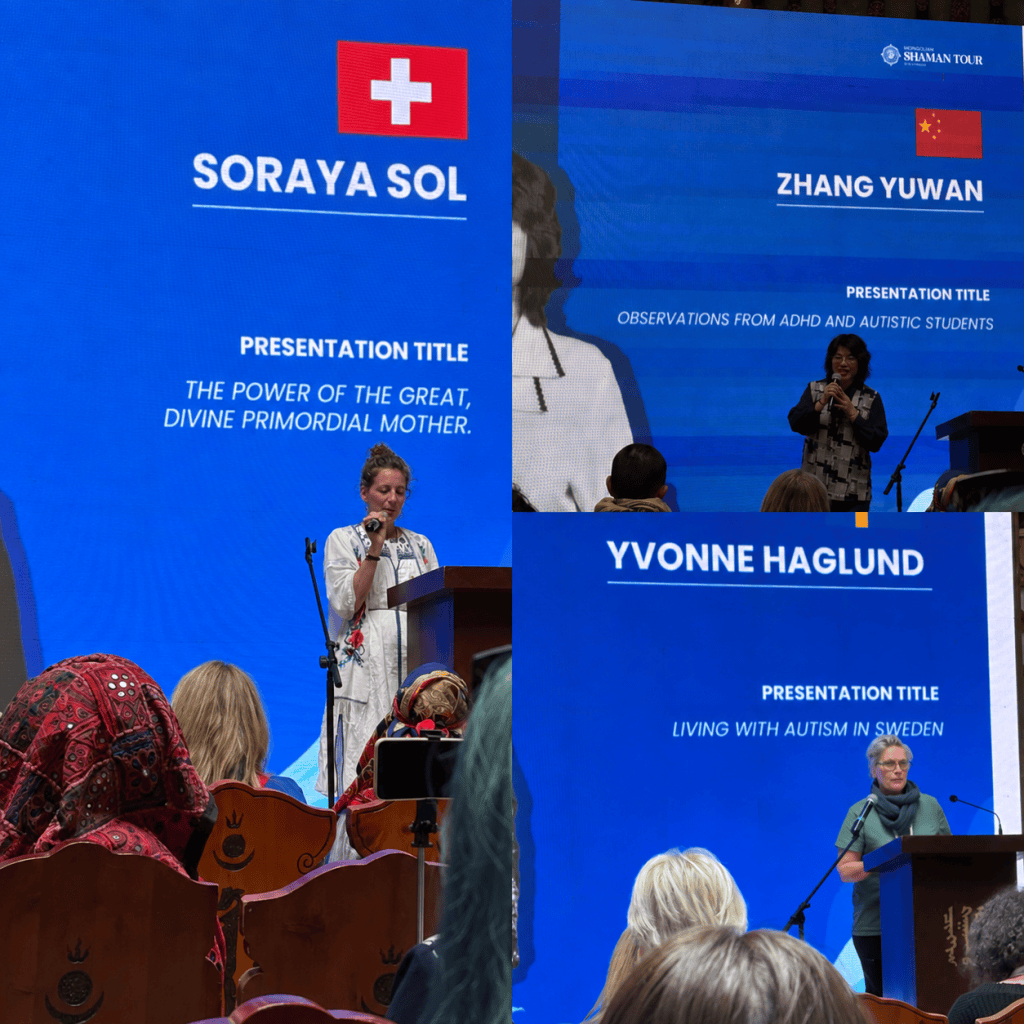
Alongside the outdoor ceremonies, the festival included sessions in which participants from different countries shared their experiences and views. The event thus became more than a colourful gathering where rituals were observed; it also became a space for people from different parts of the world to learn about one another’s traditions.
Shamans from Mongolia, Korea, China, Buryatia, Russia, Sweden, Norway, Switzerland, Germany, Türkiye and Peru took part. Some participants from Sweden and Norway identified with the Sámi tradition. I learned that the Sámi, who live in the north of Scandinavia, are one of the region’s Indigenous peoples. Reindeer herding is not the livelihood of all Sámi people, but it remains important in the culture of some Sámi communities.
Some participants from Germany and Switzerland saw themselves as distinct from the dominant German identity in their countries and connected their practices with older, pre-Christian local traditions of Europe. Their accounts made me think that different communities view shamanism not simply as a belief inherited from the past, but as a living tradition being given new meaning today.
The theme of autism I mentioned at the beginning of the festival was explored in greater detail during closed sessions. In addition to the social acceptance of autistic children and children with attention-deficit/hyperactivity disorder, participants discussed how activities such as rhythm and dance might support these children’s participation and self-expression.
When the festival ended and I returned to the city centre, I still felt as though I were inside a mythological story. In the days that followed, I began to discover Ulaanbaatar more closely. With its ger districts, Buddhist monasteries, museums and the legacy of Genghis Khan visible everywhere, the capital would become the second part of my journey.

